Origin of the Mulki Issue
Hyderabad: Mulki is a Persian word and means countrymen. The origin of the Mulki issue can be traced to the migration of Muslims to the Deccani plateau during the medieval period. The first wave of Muslim migrants came to Deccani Plateau during the rule of the Bahamani Sultans and called themselves Mulki. The next wave […]


Hyderabad: Mulki is a Persian word and means countrymen. The origin of the Mulki issue can be traced to the migration of Muslims to the Deccani plateau during the medieval period. The first wave of Muslim migrants came to Deccani Plateau during the rule of the Bahamani Sultans and called themselves Mulki. The next wave of Muslim migration took place during the rule of the QutbShahis and they were called as Gair-Mulkis or Afakis. However, the issue of Mulki and non-Mulki came to prominence during the Nizam rule which can be understood in the following three phases:
Phase I – 1853 to 1883
Phase II – 1883 to 1911
Phase III – 1911 to 1948
MULKI ISSUE UNDER THE NIZAM STATE
PHASE I:
Before Salarjung I became the PM of Hyderabad State, non-Mulkis were employed in the Hyderabad state largely based on the recommendations of the British resident. However, the number of such employees was very limited.
Salajung I was appointed as the Diwan or PM of the Hyderabad State in 1853. At that time the Hyderabad state was in severe financial crises with too many debts. The situation was so bad that the Britishers threatened Nizam that they would start direct rule in the state in the event of non-payment of debts to the British Government. Salarjung I assessed the entire situation and realized that the most important reason for the economic crisis was the high level of corruption in the collection of land revenues. Land revenue was the main source of income to the Hyderabad state.
Salarjung I introduced a number of administrative reforms to counter this situation. However, these reforms were largely influenced by the administrative system adopted by the Britishers. In order to implement these reforms, people trained under the British Government or people who had access to the western education were required. However, the literacy rate in Hyderabad state at that time was less than 5%. Also the Hyderabad state followed a conservative system of education in which the medium of instruction was Persian. Because of all these reasons, Salarjung I had to recruit non-Mulkis to implement his administrative reforms.
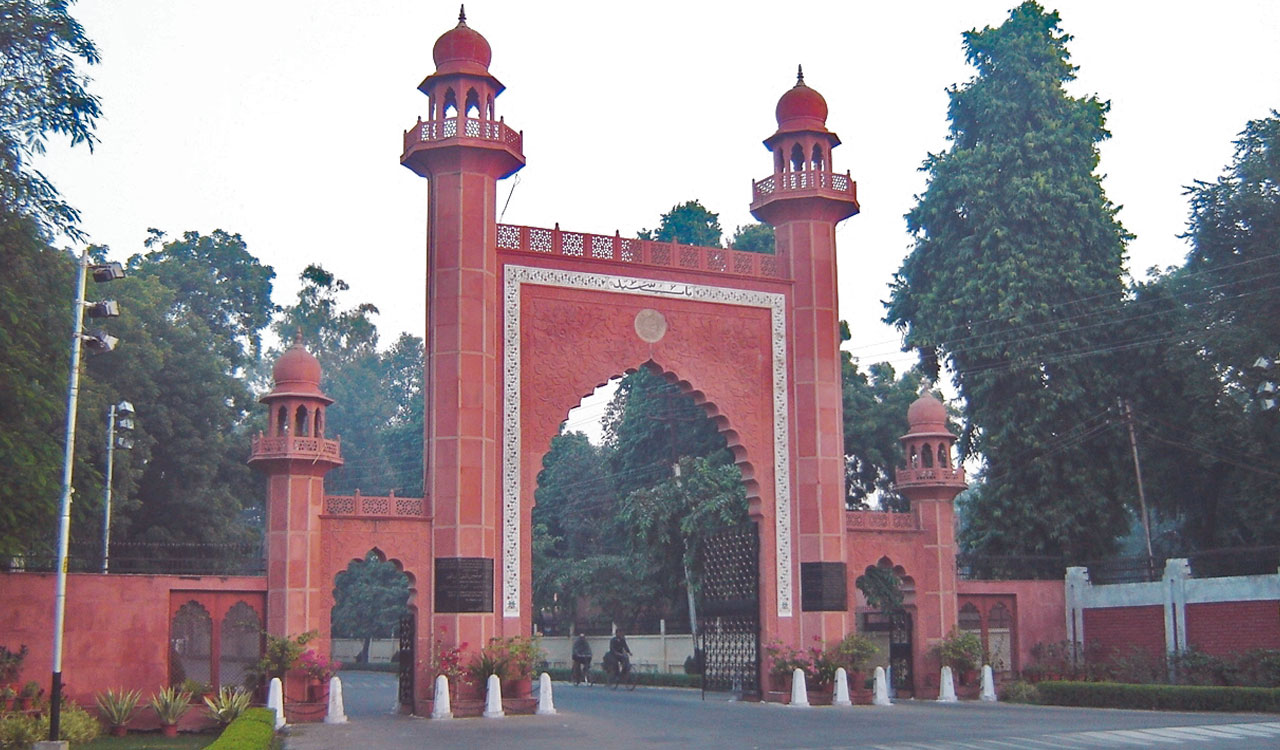
Most of the non-Mulkis recruited by Salarjung I were from the Madras and Bombay Presidencies. Non-Mulkis were also recruited from amongst the graduates of Aligarh Muslim University. With the appointment of non-Mulkis in Government services, a new level or class of people belonging to the western educated community emerged in the Hyderabad society and started influencing the conventional and conservative Hyderabadi culture. Also, the non-Mulki employees slowly started to ascertain their power over the Nawabs and Jagirdars. They also created a number of unnecessary posts within the Government service and started recruiting their own people for these posts. This increased the number of non-Mulkis in public service and the increase was perceived as a threat by the Mulkis.
Salarjung I realised the impact of non-Mulkis on the Hyderabad state and in order to prevent any resentment from the Mulkis, he took the following measures.
1. He clearly demarcated the political affairs from the administrative affairs and restricted non-Mulkis to the administrative sphere by ensuring that only Mulkis from the Hyderabad state held a key post in the political affairs of the state.
2. He himself identified educated young men from noble families and appointed them as ministers. The non-Mulki employees had to work under the supervision of these ministers.
3. He continued employment of Mulkis along with non-Mulkis under the state. All Mulkis were posted under the Munsib department and were designated as irregular forces.
4. Salarjung I rejected the demand of non-Mulki to replace the official language of the state Persian with Urdu.
5. The non-Mulkiwere employed on a salary basis. No Inams in the form of Jagirs, pensions and so on and titles could be conferred on the non-Mulkis.
Along with the above-stated measures, Salarjung I also started concentrating on increasing Mulki representation in public employment by focusing on education and training. Salarjung I introduced modern education by establishing various educational institutions, prominent among them were:-
i. In 1856, Darul-Ud-Uloom oriental college was established to impart English education. It was affiliated with Punjab University.
ii. In 1873, Madarasa-e-Aliya was established to impart English education to the children of noble families.
iii. In 1873, Madarsa-e-Aizya was established to impart English education to the children of the Mulki employees, the residents of the Old City and other important persons in the state.
To be continued…
By ByDeepika Reddy
Director, Shikara Academy
Mobile No. 7702026769

Related News