Rewind: Kharg Island, Iran’s oil lifeline, and the rise of Mojtaba Khamenei
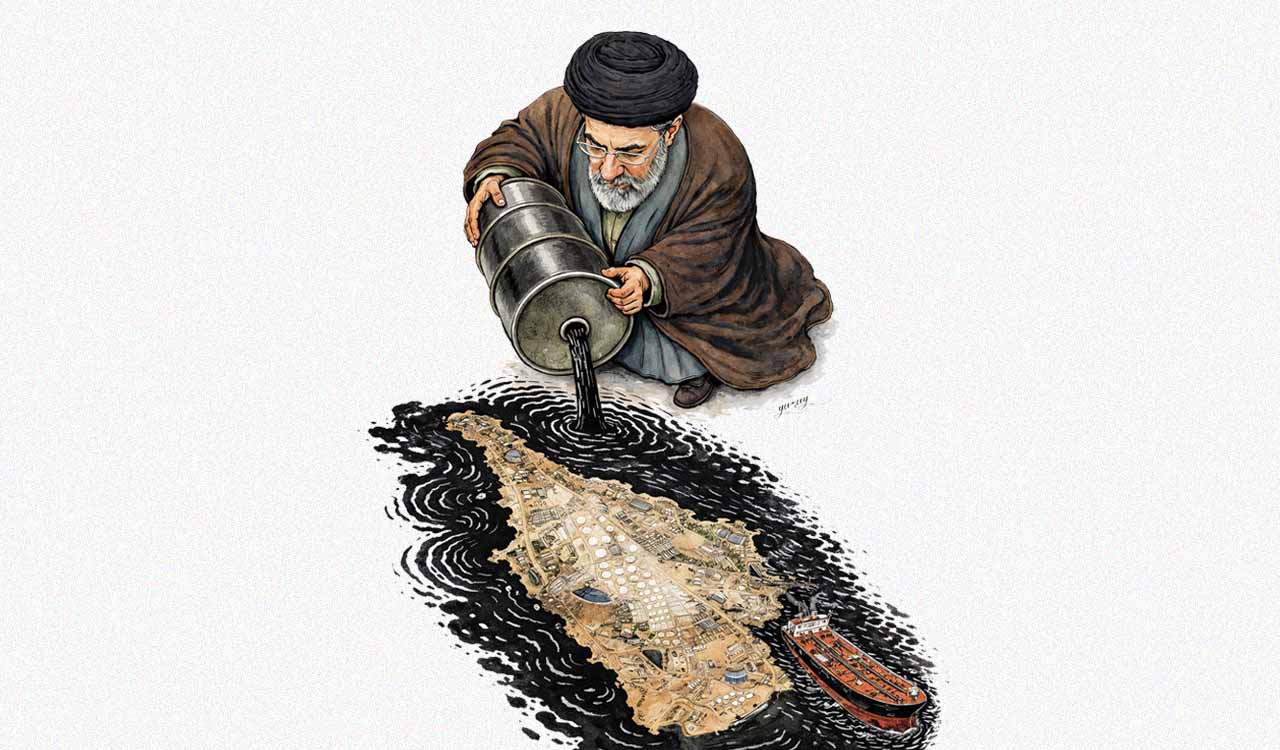
Often called Iran’s ‘forbidden island’, Kharg is not just a military objective but a strategic node capable of reshaping oil markets and geopolitics


By Brig Advitya Madan (retd)
The ongoing military confrontation involving Iran has drawn attention to several strategic targets across the Persian Gulf. Yet few locations are as critical to Iran’s economic survival — and to global energy stability — as Kharg Island. Recent strikes reportedly targeting nearly 90 military installations on the island have once again highlighted its central role in the geopolitics of oil.
Also Read
Kharg Island, often described as Iran’s “forbidden island”, lies about 25 kilometres off Iran’s coast in the Persian Gulf and roughly 483 kilometres northwest of the Strait of Hormuz. Though modest in size — approximately eight kilometres long and covering just about 20 square kilometres — its importance far exceeds its geography. Kharg serves as the principal hub for Iran’s crude oil exports and functions as the backbone of the country’s petroleum economy.
Nearly 90 per cent of Iran’s crude oil exports pass through this island. It houses enormous oil storage tanks capable of holding around 30 million barrels of crude. The island is also equipped with extensive loading facilities, multiple jetties, and an airstrip supporting logistical and security operations. At peak capacity, around 10 million barrels of oil can be loaded onto tankers from its terminals every day.
Kharg’s importance stems not merely from its infrastructure but from its location within Iran’s energy network. Several of Iran’s largest oil fields are situated nearby, and the pipelines carrying crude from these fields converge on Kharg’s export terminals. In effect, the island acts as the final gateway through which Iranian oil reaches global markets.
The island’s development as a major oil terminal dates back to the 1960s during the reign of the Shah of Iran. At the time, it was built with the assistance of the American oil company Amoco as part of Iran’s broader effort to modernise its petroleum export infrastructure. Following the Iranian Revolution, the Iranian state seized control of these facilities, transforming Kharg into the cornerstone of its national oil export system.
Indispensable
Another reason Kharg is indispensable lies in the geography of Iran’s coastline. Much of Iran’s Gulf coastline is relatively shallow, making it unsuitable for large crude carriers to dock safely. Kharg, however, lies close to deeper waters, allowing massive oil tankers to berth easily at its terminals. Over the decades, Iran has constructed numerous jetties on the island to facilitate this process, enabling large vessels to load crude efficiently.
Under normal conditions, roughly 1.5 million barrels of Iranian oil pass through Kharg every day. In anticipation of escalating tensions and possible strikes, Iran had significantly ramped up exports earlier this year. By mid-February, exports had reportedly reached nearly 3 million barrels per day as Tehran sought to move as much crude as possible before the possibility of military action.
At the same time, Iran also appeared to adopt precautionary measures to protect its infrastructure. By mid-January, nearly 27 storage tanks on the island were filled with crude. However, as tensions intensified, Iranian authorities reportedly reduced this number to about nine by early March, lowering the amount of oil stored at the terminal and thereby reducing the risk of catastrophic losses in the event of a strike.
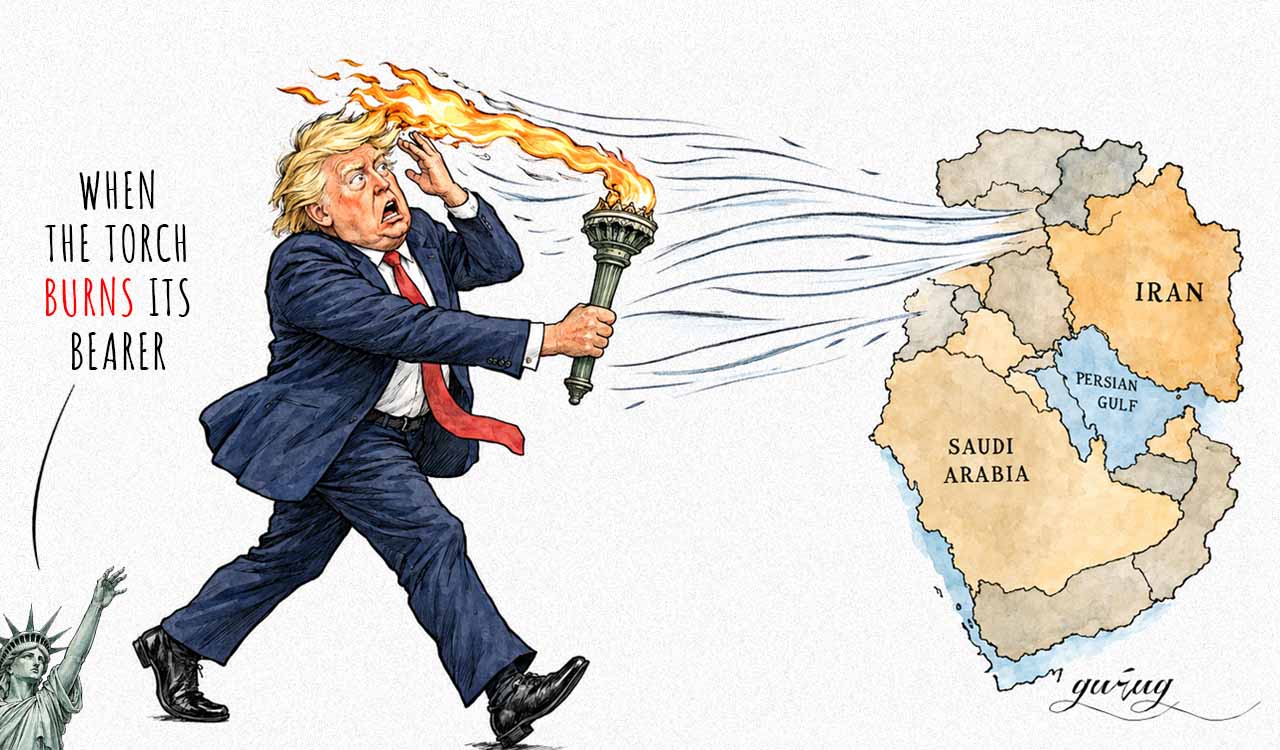
Interestingly, despite the recent attacks on military installations, oil infrastructure on Kharg Island has largely remained untouched. This restraint may not be accidental. One plausible explanation is that the United States and its allies are keen to avoid triggering a dramatic surge in global oil prices. Any direct strike on Iran’s oil export facilities would almost certainly disrupt supplies and send shockwaves through global energy markets.
There may also be a strategic signalling component. By refraining from targeting oil infrastructure, Washington could be sending a message to Tehran not to retaliate against the oil facilities of neighbouring Gulf states. Such an escalation could potentially ignite a wider regional conflict with severe consequences for global energy security.
Another possible calculation is political. Iran’s economic recovery after the conflict will depend heavily on its ability to resume oil exports. Preserving the export infrastructure could therefore prevent further economic devastation and reduce the likelihood of long-term instability within Iran itself.
Nevertheless, even without direct attacks on oil facilities, the strategic vulnerability of Kharg Island is already influencing global energy markets. The mere threat to Iran’s primary export hub introduces significant uncertainty. Energy markets tend to react sharply to such risks, especially in a region that accounts for a substantial share of the world’s oil supply.
Should Kharg Island’s operations be disrupted — even temporarily — the consequences would ripple far beyond Iran. A prolonged interruption could push global crude prices dramatically higher. Analysts warn that Brent crude could potentially approach $150 per barrel if tensions escalate further or if shipping routes in the Persian Gulf come under threat.
For energy-importing nations such as India, such a spike would have serious economic implications. Rising oil prices translate directly into higher fuel costs, inflationary pressures and widening trade deficits.
Kharg Island thus represents far more than a military objective. It is the beating heart of Iran’s oil economy and a critical node in the global energy system. Any escalation around this small island has the potential to reshape oil markets and influence geopolitical calculations across continents.
In the volatile strategic environment of the Persian Gulf, geography often dictates destiny. And in the case of Kharg Island, a small patch of land in the Gulf carries a weight that far exceeds its modest size.
Kharg Island: The final gateway
- Share of Iran’s crude oil exports routed through Kharg: around 90%
- Estimated storage capacity on the island: 30 million barrels (one barrel is around 159 litres)
- Peak loading capacity at export terminals: Up to 10 million barrels/day
- Typical export range: 1.5–3 million barrels/day
- Total area of the island: around 20 sq km
- Decade when Kharg was developed into a major oil terminal: 1960s
- Distance from Iran’s mainland in the Persian Gulf: 25 km
The Mojtaba Moment
The rise of Mojtaba Khamenei, the second son of Iran’s Supreme Leader Ali Khamenei, has rapidly emerged as one of the most consequential developments of the conflict. What was once an internal question of succession is now inseparable from the regional war, shifting American objectives, and the fragile stability of global energy markets.
Formally elevated as Iran’s Supreme Leader following the death of Ali Khamenei, Mojtaba inherits not merely a powerful office but a crown of thorns. Yet his leadership begins under a cloud of uncertainty, with limited public visibility and lingering questions about his health. The pressures on Iran — from military confrontation with Israel, hostility from the United States, and a restless domestic population — are converging at a moment when the country may be approaching its most controversial leadership transition since the Iranian Revolution.
Iran’s political system has always rejected the idea of monarchy, yet the potential succession of Mojtaba Khamenei suggests an unmistakable drift toward dynastic continuity. The Islamic Republic has had only two Supreme Leaders: Ruhollah Khomeini and his successor, Ali Khamenei. The elevation of Mojtaba would mark the first time that the position effectively passes from father to son.
Despite holding no formal government office, Mojtaba is widely regarded as a quiet but influential figure within Iran’s power structure. Unlike reformist clerics who periodically advocate moderation or political opening, he is seen as a hardline conservative. His reputation is that of a silent strategist rather than a public political figure—someone who prefers operating through networks rather than institutions.
His strongest ties appear to be with the Islamic Revolutionary Guard Corps (IRGC), the powerful military and ideological force that has become central to Iran’s security apparatus and regional strategy. The IRGC’s influence has grown significantly in recent years, particularly as Iran has confronted international sanctions, covert operations, and military threats.
If Mojtaba assumes leadership, it is likely that the IRGC will become even more deeply entrenched in the Iranian state. This could reinforce the dominance of hardline factions within Iran’s political system and reduce the already limited space for reformist politics.
The world’s most hunted leader?
The geopolitical implications of such a succession would be immediate. Both the United States and Israel have taken an uncompromising stance toward the Iranian leadership during the ongoing conflict. For Washington and Tel Aviv, a hardline figure closely aligned with the IRGC would represent continuity rather than change.
Already sanctioned by the United States, Mojtaba would likely become one of the world’s most closely watched—and targeted—political figures. Israeli officials have openly suggested that Iran’s leadership could become a military objective in the wider confrontation.
This raises a critical question: would Mojtaba’s rise serve as a lifeline for the Iranian regime, ensuring continuity during wartime, or would it effectively place a target on the country’s next Supreme Leader?The answer may depend less on Tehran than on Washington’s evolving strategy.
America’s Shifting Goals
The United States under Donald Trump has sent mixed signals about its objectives in the conflict. Initially framed as a limited military campaign—one designed to deter Iran and prevent escalation—the war’s stated goals have repeatedly shifted.
At various points, Washington has spoken about containing Iran’s nuclear programme, forcing Tehran to surrender unconditionally, or even encouraging regime change. Statements from the White House have alternated between predictions of a swift end to the war and warnings that it could continue indefinitely.
Such moving goalposts complicate the strategic landscape. If the ultimate objective is regime change, targeting the leadership may appear logical. But if the goal is merely to weaken Iran’s military capabilities, escalation could prove counterproductive.
If Mojtaba faces the daunting task of steering the country through this crisis while maintaining regime stability at home. Whether he chooses confrontation or caution will shape the region’s trajectory for years to come. For the world, the stakes could hardly be higher. The Mojtaba moment may determine not only Iran’s political future but also the fragile balance between war and stability in West Asia.
The Military Balance
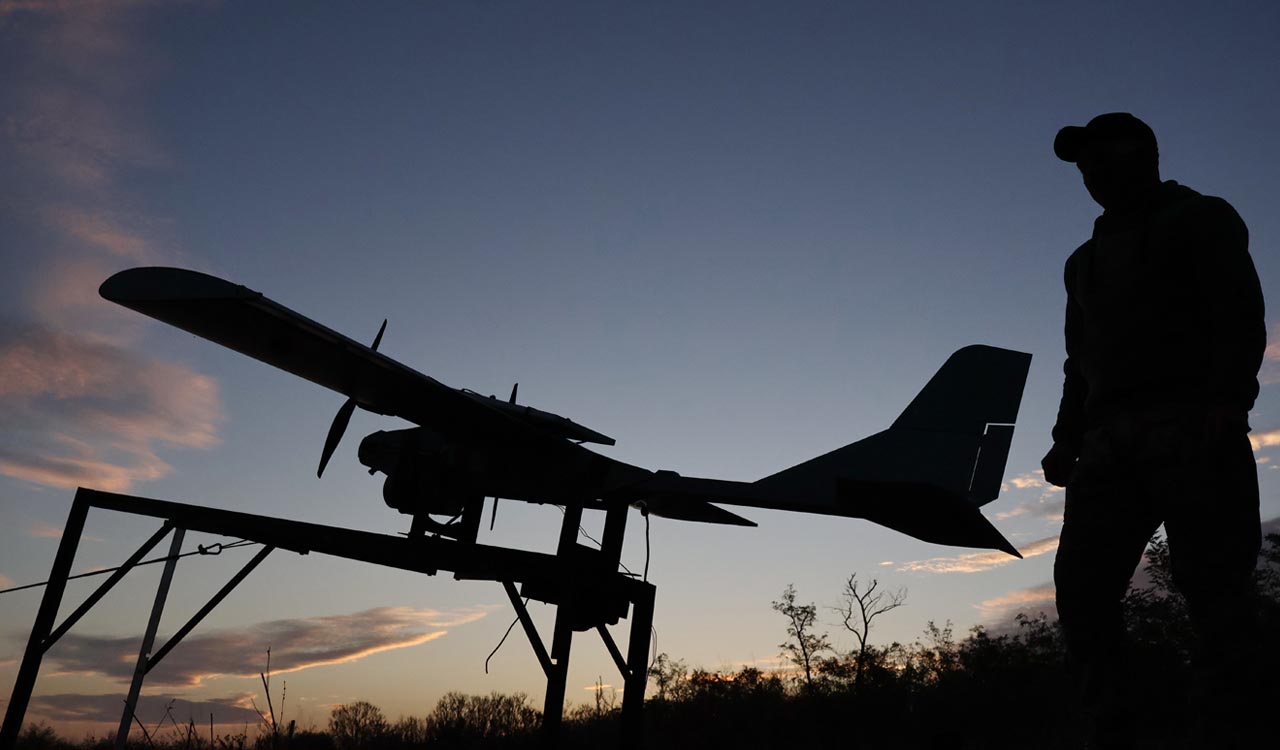
Iran possesses an arsenal of ballistic missiles with ranges exceeding 2,000 kilometres—more than enough to strike targets across the region, including Israel, which lies roughly 1,600 kilometres away. Some of these systems reportedly travel at hypersonic speeds approaching Mach 14. Iran has also deployed missiles capable of carrying cluster warheads, including variants of the Khorramshahr missile, which can release dozens of bomblets mid-flight. Each bomblet carries explosive payloads capable of spreading destruction across a wide area.
These weapons present a significant challenge to missile defence systems such as Israel’s Iron Dome, as well as American systems like THAAD and Patriot missile. While these defences can intercept incoming missiles, they come at considerable cost. Iran’s strategy of saturating defences with multiple launches forces defenders to expend expensive interceptors rapidly. At the same time, Iran’s own missile stockpiles are not limitless. Analysts estimate that Tehran may need to fire several missiles to overwhelm a single interceptor, which means its inventory could also diminish quickly. This dynamic suggests that neither side can sustain prolonged high-intensity exchanges indefinitely.
(The author is a retired Army officer)

Related News