Telangana Sada Bainama regularisation resumes, farmers face fresh hurdles
Telangana’s Sada Bainama land regularisation process has resumed after the affidavit rule was scrapped, but farmers continue to face delays. New procedures under the Bhu Bharathi Act, verification steps, and inconsistent implementation are slowing approvals and creating fresh uncertainty.
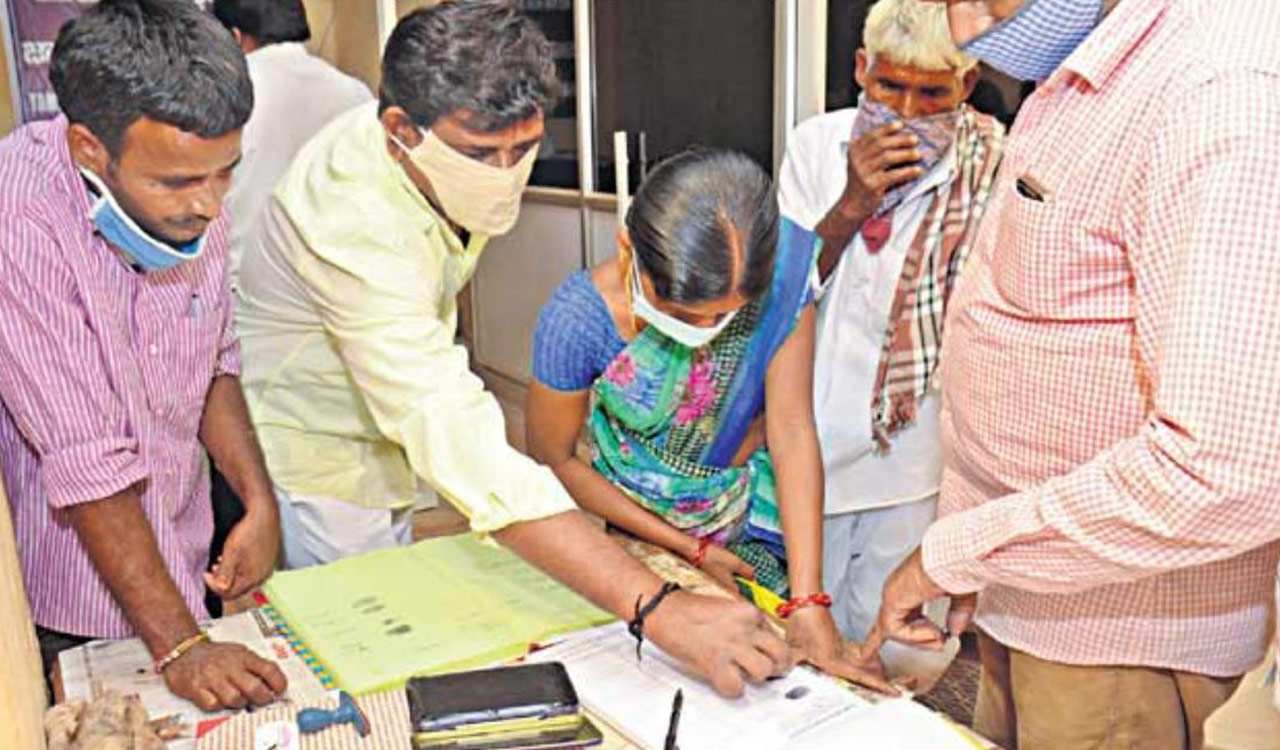


Hyderabad: The long-delayed Sada Bainama regularisation process in Telangana has resumed this week. But instead of relief, farmers are now facing a maze of new procedures and uncertainty.
The Congress government recently scrapped the controversial rule requiring affidavits from both buyers and sellers. Introduced last year, the condition had stalled nearly nine lakh applications. While this move has technically revived the process, the ground reality remained far from smooth.
Nearly nine lakh farmers applied for regularisation in 2020 when the previous BRS government initiated the process. Following court cases and subsequent clearance, the current Congress government initiated the process last year, but mandated affidavits from both buyers and sellers, which paralysed the process.
In thousands of cases, original sellers were either untraceable or unwilling to come forward, leading to mass rejections by district collectors. Farmers who had purchased land through simple agreements were left in limbo, unable to secure legal title. After growing complaints, the government scrapped the rule. With the process resuming, district collectorates are flooded with appeals to revisit previously rejected applications, creating fresh pressure on an already burdened system.
Another challenge is the new framework under the Bhu Bharathi Act. Unlike earlier, when Tahsildars handled cases locally, the responsibility now rests with Revenue Divisional Officers (RDOs). This shift has added multiple layers, including field verification by revenue officials, document scrutiny, and digital entry on the portal, making the process slower and more complex.
Further, farmers are required to submit affidavits backed by strong evidence, attend inquiries in person, and wait through a 30-day objection period. Notices are also being issued to neighbouring landowners, further complicating matters. Any objection can delay or derail the case entirely.
In many older cases, especially involving pre-2014 transactions, lack of proper documentation remains another major hurdle. Even without the seller affidavit rule, proving ownership is becoming difficult for many applicants. There is also confusion at the field level. Officials across districts are interpreting guidelines differently, raising fears of inconsistent decisions and further delays.
While the government claimed that the revised system would ensure transparency, farmers remained sceptical. For many farm land owners, the restart feels less like a solution and more like a reset, with the same bureaucracy, new rules, and no clear timeline for resolution.

Related News