Why the previous BRS Govt could not act against all illegal encroachments
During 2014 to 2024, Hyderabad was governed under a unique administrative arrangement established under the Andhra Pradesh Reorganisation Act of 2014. This arrangement, particularly under Sections 5 and 8, severely restricted the Telangana government’s authority over the city.
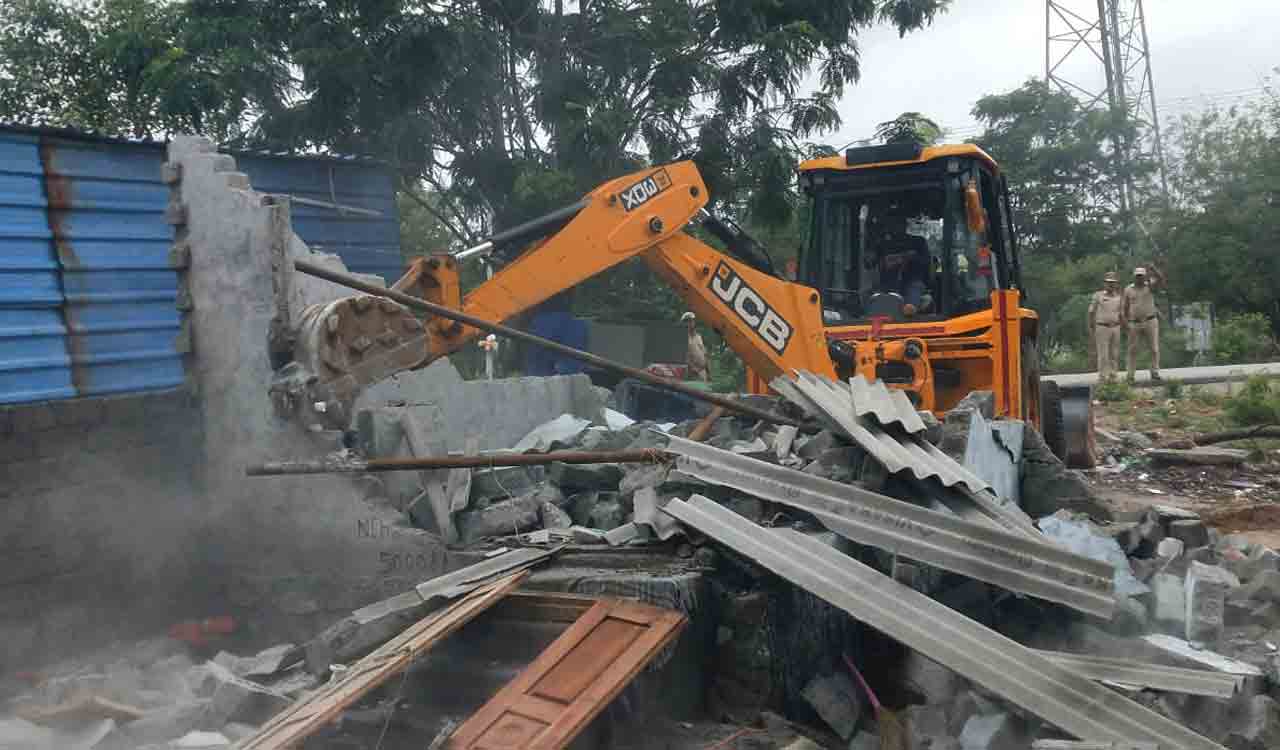


Hyderabad: The launch of a demolition drive by the Hyderabad Disaster Response and Assets Protection Agency (HYDRAA) has sparked questions on why the previous BRS government did not launch a similar drive to remove illegal constructions and encroachments on water bodies. What most of those who pose these questions do not know are the limitations that the Telangana government had faced during the past decade, when Hyderabad served as the common capital for both Telangana and Andhra Pradesh.
During 2014 to 2024, Hyderabad was governed under a unique administrative arrangement established under the Andhra Pradesh Reorganisation Act of 2014. This arrangement, particularly under Sections 5 and 8, severely restricted the Telangana government’s authority over the city.
According to Section 5 of the Act, Hyderabad was designated as the common capital for both Andhra Pradesh and Telangana for a period of 10 years, ending on June 2, 2024. During this time, Chandrashekhar Rao did not have unilateral control over the city, as it remained under the jurisdiction of both States. According to officials, this unique arrangement complicated governance, especially when it came to enforcing decisions that involved private properties.
Section 8 further complicated these challenges by granting the Governor of the common capital area – an appointee of the Central government, with exclusive responsibilities for the law and order, citizen security, and protection of property. The Governor’s decisions in these matters were final and did not require the approval of the Telangana government including its Chief Minister and the Cabinet. The Act also mandated that the Governor be assisted by two advisors, both of whom were retired IAS and IPS officers, effectively sidelining the Chief Minister from making unilateral decisions on critical urban issues, senior officials in the know of things told Telangana Today.
This arrangement made it nearly impossible for the BRS government to initiate measures that could have affected private properties in Hyderabad without the Governor’s consent. The Governor during this period, Tamilisai Soundararajan, was often seen as non-cooperative with the State government, further limiting Chandrashekhar Rao’s efforts to take decisive action. Any attempts by the Telangana government to enforce property regulations in Hyderabad would likely have been vetoed by the Governor, who had the final say in matters of property and security, they pointed out.
Hence, Chandrashekhar Rao’s cautious approach, ensuring that Hyderabad did not fall entirely under the Governor’s control, was a strategic decision rooted in the complex legal framework established by the Reorganisation Act. It is this historical context that justifies his actions — or lack thereof — during those ten years. The subsequent establishment of the HYDRAA by the current Congress government after June 2024, underscores the constraints the Chandrashekhar Rao government faced. These constraints were lifted only after the 10-year common capital period ended, enabling the State government to establish HYDRAA.
In retrospect, the limitations imposed by Sections 5 and 8 of the Reorganisation Act served as a double-edged sword for Telangana, safeguarding the interests of both States while simultaneously restricting the autonomy of the Telangana government.

Related News
-

Telangana Governor, CM greet people on Vijayadashami, pray for peace and prosperity
-
Manne Krishank dares Revanth Reddy to order CBI probe into allegations against family
-
Revanth faces political test as Left parties keep MLC options open
-
Godavari-Cauvery link a death warrant for Telangana’s water rights: Harish Rao