Women outnumber men in municipal poll nominations in erstwhile Medak district
Women candidates have outnumbered men in nominations for the February 11 municipal elections in the erstwhile Medak district. Despite 50 per cent reservation, women filed more nominations, reflecting rising political participation across municipalities.
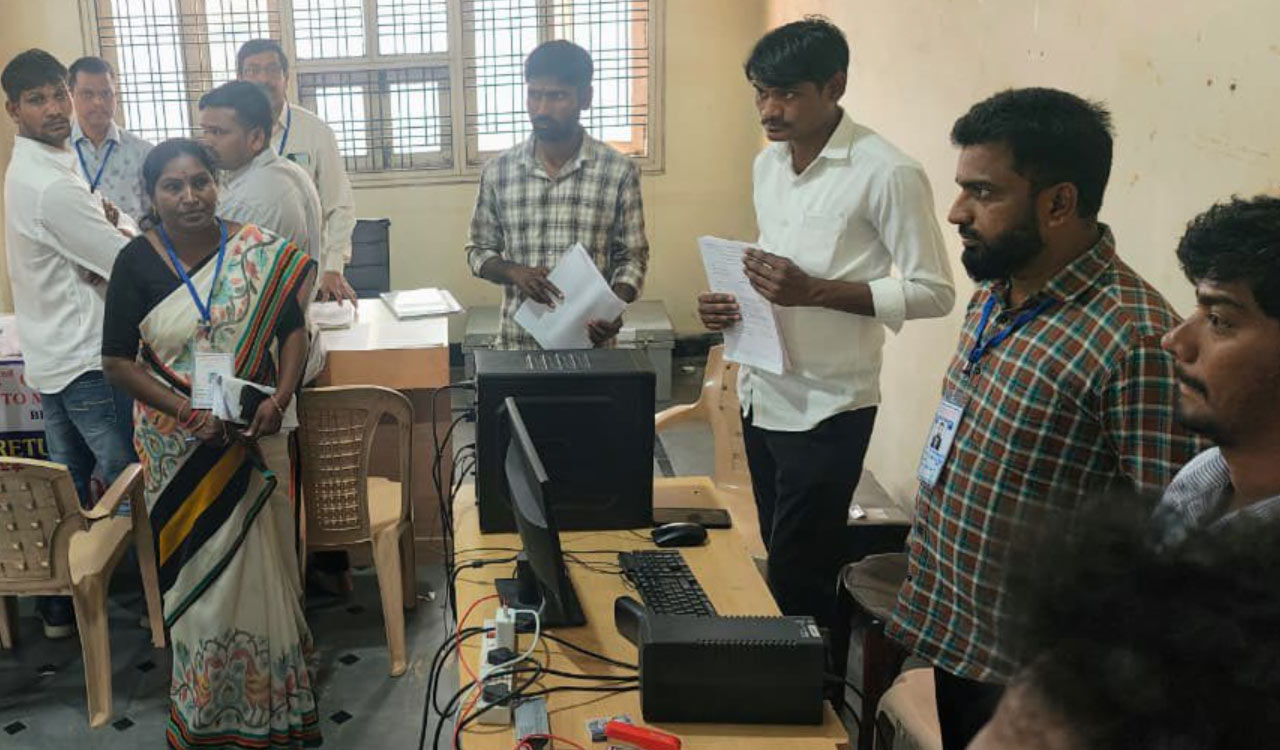


Sangareddy: The forthcoming municipal elections in the erstwhile Medak district on February 11 are witnessing increased interest from women, with a large number of them contesting and outnumbering men in nominations.
There are 19 municipalities in the erstwhile Medak district with a total of 403 wards. Together, these wards have received 1,657 nominations. Of these, 885 were filed by women, while 772 were filed by men. Although 50 per cent of the wards were reserved for women, the number of nominations filed by them exceeded the reservation quota, indicating their growing interest in politics in the district.
Out of the 19 municipalities, 12 municipal chairperson posts were reserved for women, which also played a key role in attracting women candidates. Sangareddy municipality, which was reserved for women in the general category, received 101 nominations from women, while men filed just 75 nominations. Municipalities reserved for women generally recorded a higher number of nominations from them. Isnapur municipality, reserved for women in the general category, received 61 nominations from women, while only 40 men entered the fray.
In contrast, municipalities reserved in the general category, where both men and women can become chairpersons under different reservation categories, received more nominations from men. For instance, Gummadidala municipality, reserved for BC general, witnessed nominations from 59 men, while only 34 women contested.
Adding to women’s political presence, women voters outnumber men in several municipalities. Across all 19 municipalities, 5.03 lakh voters have enrolled, with women voters exceeding men by about 6,000.

Related News