Opinion: India’s electoral crisis — where votes natter, not voters
When elections are driven by money, media optics, and engineered defections, the average citizen’s vote risks becoming symbolic rather than decisive


By Geetartha Pathak
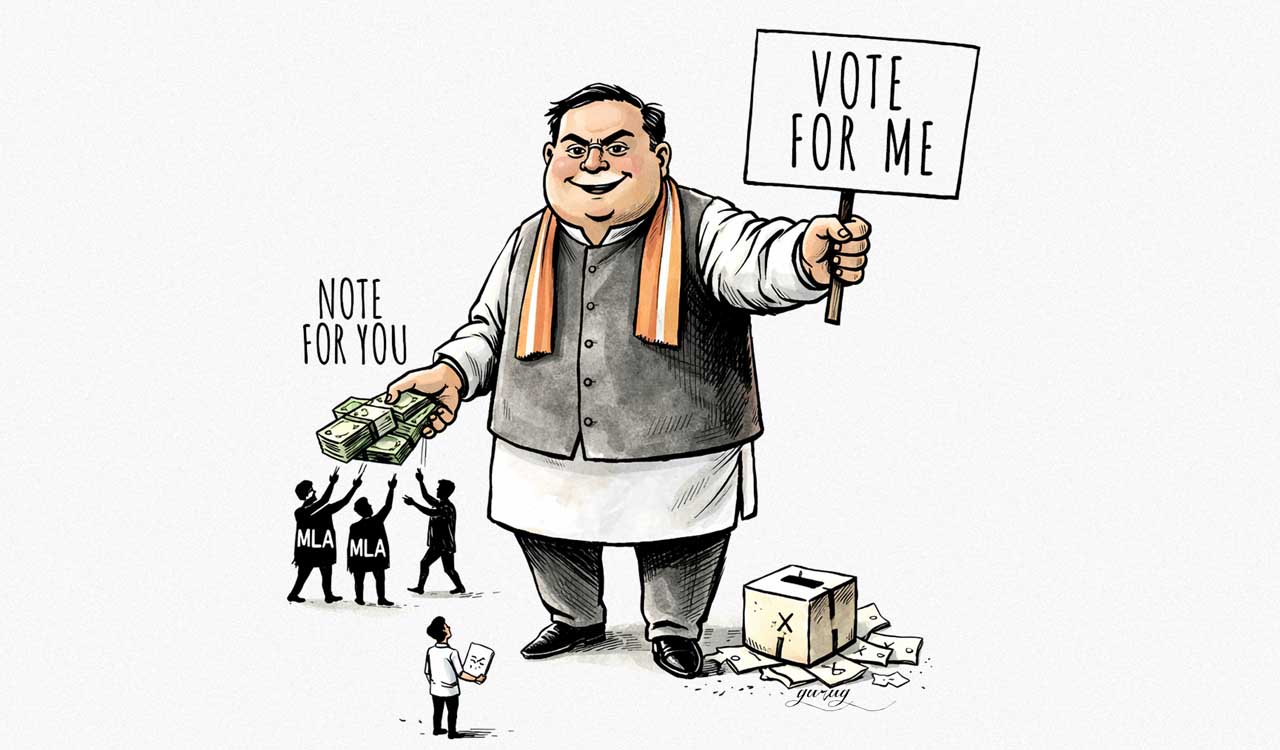
The recent Rajya Sabha elections across multiple States have once again laid bare a disturbing reality: India’s electoral democracy is increasingly shaped not by ideology or public mandate, but by inducement, manipulation, and raw financial power.
Also Read
Cross-voting by opposition MLAs, invalid ballots, and strategic abstentions ensured comfortable victories for the ruling Bharatiya Janata Party (BJP) in States like Haryana, Odisha, and Bihar. These events are not isolated aberrations — they are part of a larger pattern that is steadily eroding the foundations of participatory democracy in India.
India has entered an era where political defections are no longer exceptions but instruments of power. The anti-defection framework, once envisioned as a safeguard against opportunism, has been systematically undermined. Legal loopholes, delayed decisions by presiding officers, and the tactical use of resignations have rendered the law increasingly ineffective.
Striking Example
The fall of the Indian National Congress government in Madhya Pradesh in 2020 — triggered by the defection of over 20 MLAs led by Jyotiraditya Scindia — remains one of the most striking examples. A similar script unfolded in Karnataka in 2019, where mass resignations of legislators brought down a coalition government. In both cases, the defecting legislators were later accommodated politically, reinforcing the perception that defection carries rewards rather than consequences.
In Maharashtra, the 2022 rebellion led by Eknath Shinde split the Shiv Sena and realigned the State’s political landscape. The subsequent split in the Nationalist Congress Party under AjitPawar further illustrated how internal dissent can be converted into regime change with remarkable speed. These developments have blurred the distinction between electoral mandate and post-election political engineering.
The fall of Congress government in Madhya Pradesh in 2020 — triggered by the defection of over 20 MLAs led by Jyotiraditya Scindia—remains a stark reminder of how electoral outcomes can be overturned, diluting the very idea of a public mandate
Even smaller States have not been immune. In Goa, repeated defections have reduced opposition parties to near insignificance, often within a single legislative term. In Arunachal Pradesh, entire groups of legislators have switched allegiance en masse, while in Manipur, political instability has frequently been resolved through defections rather than democratic consensus. In Uttarakhand and Jharkhand episodes of political realignment have raised persistent questions about the sanctity of mandates.
In Assam, too, the trend is visible. The joining of former Assam Congress chief Bhupen Bora and Member of Parliament Pradyut Bordoloi in the BJP just before elections, and shifting loyalties by some senior figures, reinforce the perception that ideology has increasingly taken a backseat to political survival and access to power.
Force of Money
Behind this culture of defection lies the undeniable force of money. Elections in India have become extraordinarily expensive, effectively excluding candidates without deep financial resources. Tickets are often distributed not merely on merit or grassroots support but on a candidate’s financial strength and capacity to sustain a high-voltage campaign.
The rise of corporate funding has exacerbated this imbalance. Mechanisms such as electoral bonds, introduced under the pretext of transparency, have instead deepened opacity by concealing the identity of donors. This has created an uneven playing field where the ruling party, with greater access to financial resources, enjoys a disproportionate advantage in mobilising voters, shaping narratives, and dominating media space.
This phenomenon mirrors trends in the United States, where corporate lobbying and Super PACs (Political Action Committees) exert enormous influence over elections. However, unlike the US, where at least partial disclosure norms exist, India’s system has often shielded donors from public scrutiny.
In Brazil, corruption scandals such as Operation Car Wash exposed the deep nexus between corporate funding and political power. India risks moving in a similar direction, albeit through more institutionalised channels.
The systematic induction of opposition leaders into the ruling party has become a deliberate political strategy. By attracting influential figures, the BJP has not only expanded its organisational strength but also weakened its rivals psychologically and structurally. The steady erosion of the Congress across States is not merely an electoral decline but also a consequence of sustained political attrition.
Personality-driven
This strategy also reshapes voter perception. When prominent leaders frequently switch sides, ideological distinctions blur, and politics becomes personality-driven rather than principle-driven. Voters are then encouraged to align with perceived power rather than policy alternatives, further entrenching the dominance of the ruling establishment.
Globally, similar patterns can be observed. In Russia, opposition figures have often been co-opted or marginalised, consolidating the ruling establishment’s grip. In Japan, the long dominance of the Liberal Democratic Party has been attributed to its ability to absorb dissent and maintain a broad coalition of interests within a single political framework. These examples demonstrate how democratic systems can gradually become less competitive without formally abandoning electoral processes.
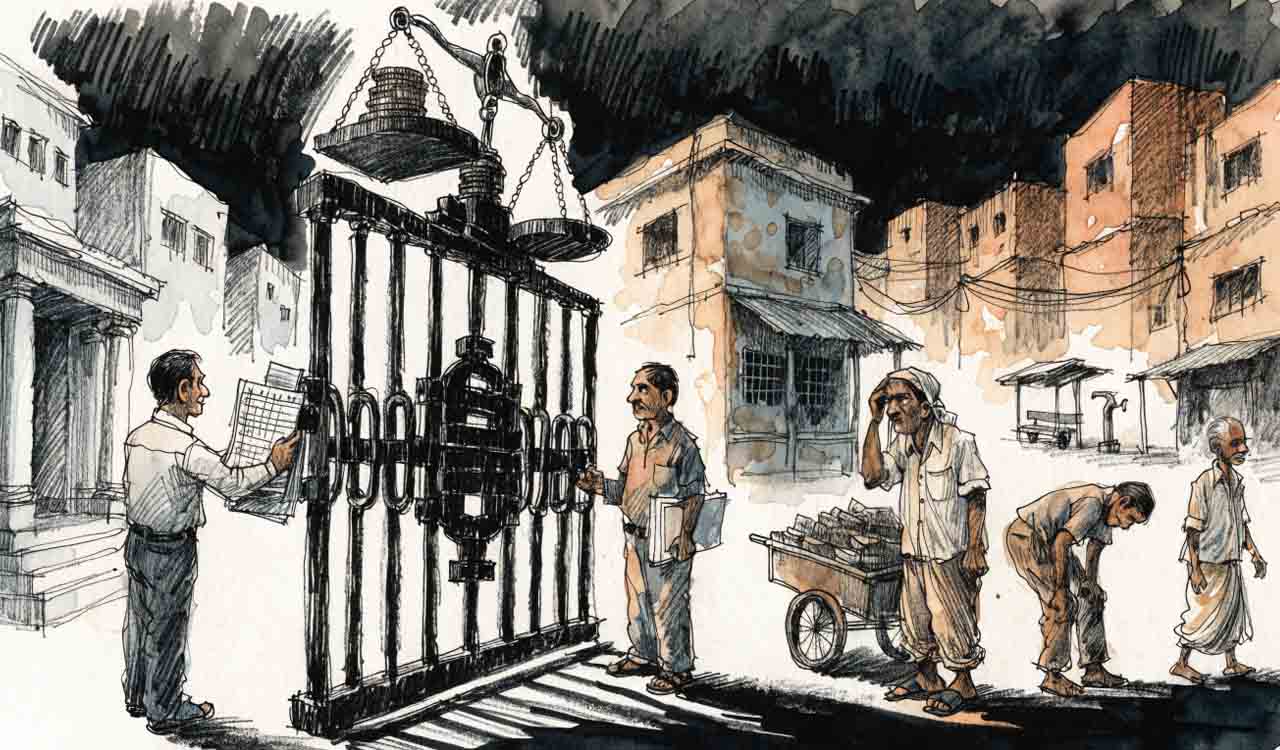
Perhaps the most worrying consequence of these trends is the diminishing role of the voter. When elections are driven by money, media optics, and engineered defections, the average citizen’s vote risks becoming symbolic rather than decisive. Electoral outcomes appear increasingly predetermined by resource asymmetry rather than genuine public choice.
The reality is stark: a small, affluent segment of society — those who fund and influence politics—exercise disproportionate control over electoral outcomes. The remaining majority participates in a system where choices are increasingly constrained, and meaningful alternatives are limited. This undermines the very essence of democracy as a system of equal political participation.
If Indian democracy is to remain meaningful, urgent reforms are non-negotiable:
- State funding of elections to level the playing field
- Complete transparency in political donations
- Stronger anti-defection provisions with time-bound enforcement
- Strict and enforceable limits on campaign expenditure
- Institutional safeguards against misuse of state machinery
- Greater independence of election oversight institutions
Without these measures, elections will continue to drift away from fairness and towards financial and political monopolies.
India’s democracy stands at a crossroads. The repeated instances of defections, the overwhelming influence of money, and the strategic weakening of opposition parties point to a system that is increasingly centralised and exclusionary. Elections, once the great equaliser, risk becoming mere spectacles—carefully managed and financially engineered.
Unless corrective steps are taken, the world’s largest democracy may continue to function in form, but not in spirit—leaving behind a political system where power flows not from the people, but from privilege.

(The author is a senior journalist from Assam)

Related News