Opinion: Making Miyawaki work
A comprehensive database will help us understand the impacts of urban forestry in the country


By Nripendra Abhishek Nrip
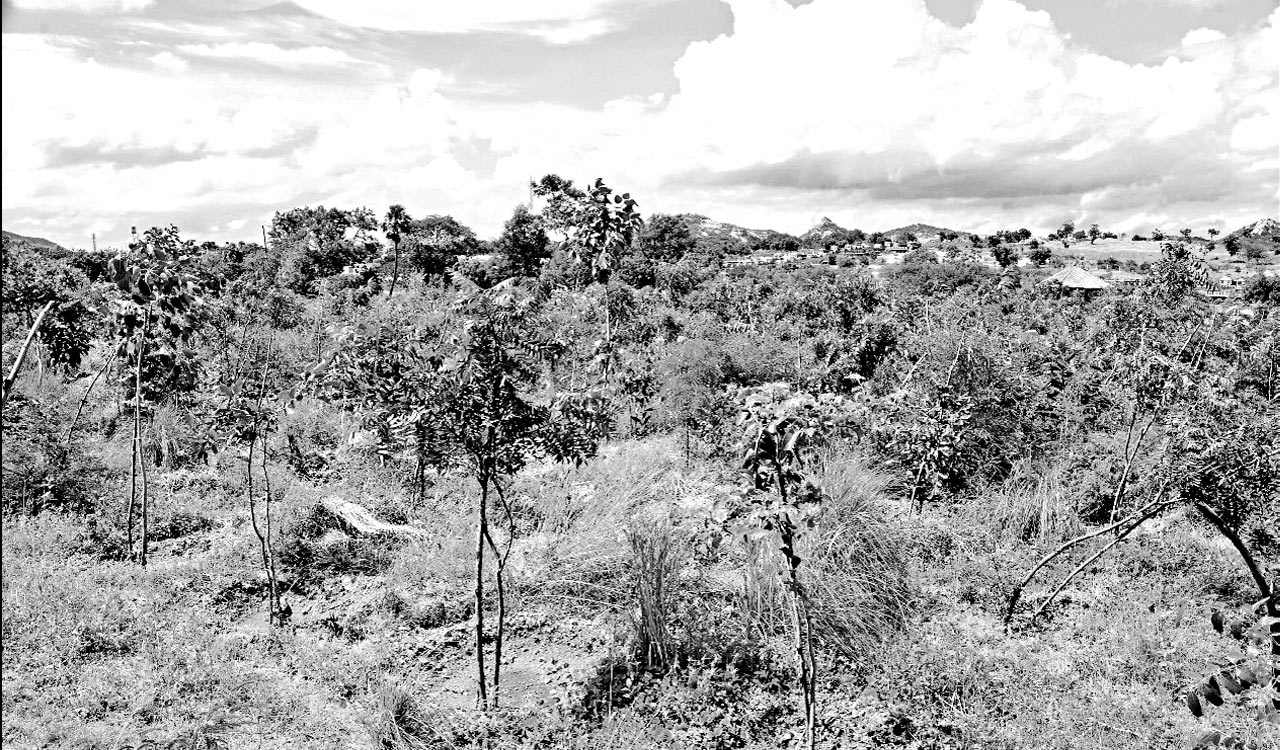
The Miyawaki method mimics the way a forest would recolonise itself if humans stepped away. Only native species that would occur naturally in that area without humans, given the specific climate condition, are planted.
Also Read
The dense green cover of indigenous trees plays a key role in absorbing the dust particles of the area where the garden has been set up. The plants also help in regulating surface temperature. Some of the common indigenous plants that are used for these forests include Anjan, Amala, Bel, Arjun and Gunj.
Green Cover
Under the Paris Agreement of 2015, afforestation was also taken into consideration aimed at reducing carbon emissions. Miyawaki projects will help meet the promises made by India under the Paris Agreement to improve its green cover by 25-33%.
According to a report, there are more than a hundred Miyawaki forests in India, but no one has tracked them. In the absence of a comprehensive database of such projects, understanding the long-term consequences and impacts of urban forestry in the country has been limited.
The continuous decline of forests on Earth remains a cause for concern. To prevent this, various methods are being adopted in the world and one of them is Miyawaki. It is a method of afforestation which was invented by a Japanese botanist named Akira Miyawaki. In small spaces, small plants are planted, which grow ten times faster than ordinary plants. The process by which forests grow and become self-sustaining takes time. The Miyawaki method accelerates forest development by building soil, using a diversity of native plants, growing healthy seedlings and planting them close together. It gives a step-by-step process for restoring native forests. The care given during the initial years of planting ensures that most plants survive and a forest ecosystem is established in a fraction of the time.
Catching on
In 2014, Miyawaki used the same method to build a wall of trees along the coast of Hiroshima, which not only saves the city from a tsunami but also set an example to the world. How can we overcome the great dangers through these special techniques?
In the last few years, Miyawaki forest projects have spread across the country due to the activism of municipalities and the tireless efforts of environmentalists. The Telangana government is using the ‘Yadadri’ method of dense plantation, which is showing positive results in Warangal. In Tamil Nadu, Green Warriors are trying to develop this type of forest model, which will not only improve the local ecology but also provide a new alternative to farmers’ income.
The cost-effective Miyawaki plantation method has gained popularity as a solution to restoring greenery in highly decorated cities such as Mumbai. The Municipal Corporation of Mumbai (BMC) has implemented this model in various vacant areas of the city to combat climate change, reduce pollution levels and increase greenery. To date, 64 Miyawaki forests have been successfully created in Mumbai.
This method has revolutionised the concept of urban afforestation. In other words, it has converted the backyards of houses and campuses into parks. The growth of plants is 10 times faster and as a result, the plantation is 30 times more dense than normal. It involves planting dozens of native species in the same area, and this becomes maintenance-free after the first three years.
This technology of fast-growing plants in dense forests will be of great help in solving today’s environmental issues, preserving life on plants, repairing damage, preserving biodiversity and native plants, reducing extinction rates by creating habitats, enhancing overall environmental quality by expanding forest cover and protecting trees against natural disasters.
Besides, the Miyawaki method is a potential candidate for achieving the objectives of improving the world’s livability and protecting ecologically fragile regions. These small groups of forest gradually turn into a vast area thus maintaining local biodiversity and controlling environmental health. They can also reduce soil erosion and control the force of water and wind.
A Few Challenges
However, concerns have also been expressed about this. It is said to be an unnatural method, which can also prove to be harmful in the long run. Miyawaki stands are being raised like an agricultural crop with high inputs of fertilizers, irrigation, pesticides, etc. So, clearly, this is a method that is not only unnatural but also prohibitively expensive.
Furthermore, Miyawaki cannot claim forest-hood ecologically, just as cereal crops cannot be said to be naturally strong grasses. And if carbon sequestration (process of capturing and storing atmospheric carbon dioxide) in the face of climate change is an excuse for their increase, it is still questionable in the context of rapid groundwater loss and aquifer drying.
Apart from this, some other disadvantages can also be seen. As most woody trees are preferred, the natural distribution of tree types is reduced. This method of afforestation is suitable only in suburban or urban areas with small spaces but not in tropical areas. Movement of wildlife species is restricted and natural movement of the ecosystem is restricted due to less availability of space between the trees. On the amount of rain falling from the trees of the Miyawaki forest, there is a question mark.
Despite all these, if concerns are solved and taken forward, then this method can prove to be very beneficial. The Miyawaki plantation system can play a much better role in increasing the area of forests. The government should work on this together with people and the private sector.


Related News