Opinion: Venezuela’s turmoil, India’s tightrope—why New Delhi must put interests before impulses
Venezuela’s turmoil is a reminder that foreign policy is about steering one’s own ship while navigating global storms


By Brig Advitya Madan (retd)
As Venezuela once again slides into political and economic turbulence, the world’s attention is predictably fixed on Washington, Caracas and the familiar rhetoric of democracy, sanctions and regime change. For India, however, the unfolding crisis is neither a distant spectacle nor a purely moral debate. It is a test of diplomatic maturity — one that demands restraint, realism and a clear-eyed focus on national interest.
Also Read
The last year has already taught the global community a hard lesson: in geopolitics, there are no permanent friends or enemies, only permanent interests. Whether it was Europe’s sudden rediscovery of energy insecurity after the Russia-Ukraine war or the shifting alignments in West Asia, foreign policy today is shaped less by sentiment and more by survival. Venezuela’s crisis must be read through the same lens.
So what exactly is at stake for India?
• First, our people — even if they are few
Unlike in the Gulf or North America, India’s diaspora footprint in Venezuela is modest. At present, there are roughly 50 non-resident Indians and around 30 persons of Indian origin in the country — a total of about 80 Indian citizens and Indian-origin residents. Most are professionals and businesspeople.
Numerically small, they are nevertheless symbolically significant. Any deterioration in internal stability, breakdown of law and order, or escalation into violence places them at risk.
For India, which has repeatedly demonstrated that the safety of its citizens abroad is non-negotiable, even a small community warrants attention. Ensuring their security, maintaining consular access, and keeping evacuation contingencies ready must be an immediate priority. Human concern may not dominate strategic calculations, but it remains their moral foundation.
• Second, oil — the silent driver of global diplomacy
Energy security is where Venezuela truly intersects with India’s core interests. India is the world’s third-largest consumer of crude oil and imports nearly 88% of its requirements. Every geopolitical tremor in an oil-producing region, therefore, reverberates directly through Indian inflation, growth prospects and household budgets.
Interestingly, Indian refineries are not currently importing crude from Venezuela. But this absence is not due to irrelevance; it is the product of sanctions politics.
Until August 5, 2019, Reliance Industries was purchasing Venezuelan crude at the scale of nearly 16 million tonnes a year — around 3.2 lakh barrels per day. The arrangement suited both sides. Venezuela’s crude is heavy, and Indian refineries — particularly private ones — have the technical capability to process such grades. But US sanctions abruptly brought this trade to a halt.
In October 2023, Washington eased sanctions on Venezuela’s petroleum sector for six months. However, by April 18, 2024, this relief was withdrawn after Caracas failed to meet US conditions on free and fair elections. Three months later, in July 2024, Reliance again secured a special waiver and resumed imports — only for these to end once more by April 30, 2025, as India sought to avoid the risk of secondary US tariffs.
For the past eight months, therefore, India has again imported no crude from Venezuela.
Yet the relationship runs deeper than current trade flows. ONGC Videsh, India’s overseas oil arm, has invested nearly one billion dollars in two Venezuelan oil fields — San Cristobal and Carabobo-1. With the US now beginning to assert control over oil operations and signalling a possible winding down of sanctions, that investment could finally be unlocked. Oil could start flowing again — not only to India, but to the world.
This matters because Venezuela holds nearly 20% of proven global oil reserves — about 303 billion barrels — more than Saudi Arabia and Iran. While much of this is heavy crude, it is precisely the type that refineries along the US Gulf Coast and in parts of Asia are designed to process. Ironically, the United States itself has plenty of light shale oil but still needs heavy crude for blending and refining efficiency.
In short, Venezuela is not a marginal producer. It is a sleeping energy giant. And energy giants reshape geopolitics.
• Third, history — the uncomfortable pattern behind regime change
Any assessment of Venezuela’s crisis must confront an inconvenient historical record. The US has been involved in regime change operations at least eight times over the past seven decades — often with unintended and destabilising consequences.
In 1953, Iran’s Prime Minister Mohammad Mossadegh was removed, and the Shah reinstated, largely over oil nationalisation. In 1954, Guatemala’s JacoboÁrbenz was ousted after land reforms threatened American corporate interests. In 1961, an attempt to topple Fidel Castro failed, pushing Cuba into the Soviet camp and culminating in the Cuban Missile Crisis.
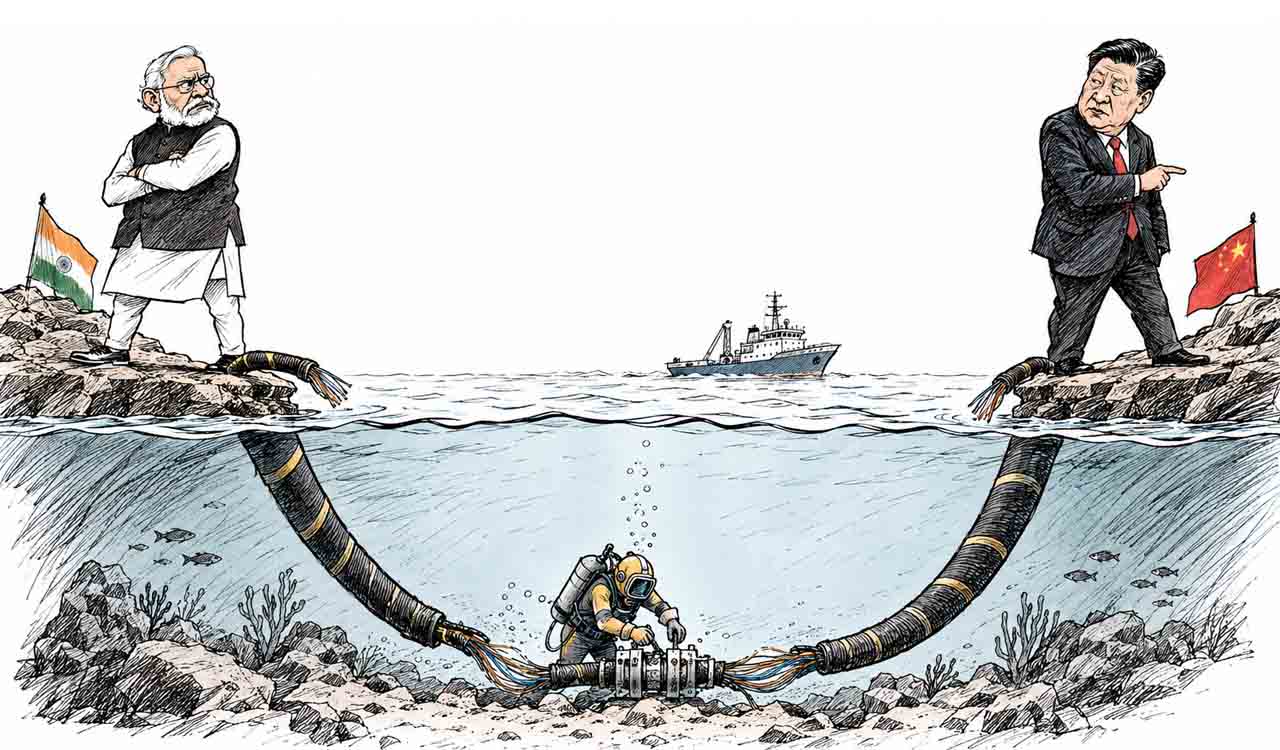
New Delhi must follow the Russia-Ukraine playbook—engage all sides, protect energy interests, and speak the language of dialogue and international law
In 1973, Chile’s Salvador Allende was overthrown to curb socialism’s spread, bringing Augusto Pinochet to power. In 1989, Panama’s Noriega was removed over drug and canal security. In 2001, Afghanistan saw the Taliban ousted — only for them to return two decades later. In 2003, Iraq’s invasion on the claim of weapons of mass destruction created a power vacuum that bred ISIS. And in 2011, Libya’s Muammar Gaddafi was removed, plunging the country into chaos and triggering a migrant crisis across Europe.
The pattern is striking: swift intervention, prolonged instability.
Venezuela may not follow the same trajectory. But history urges caution. External political engineering rarely produces neat outcomes. More often, it produces fractured states, radicalisation, and humanitarian disasters.
What should India do?
The answer lies in the path India has already been walking — particularly since the Russia-Ukraine war. Despite intense global pressure, New Delhi has neither embraced ideological camps nor abandoned its principles. Instead, it has pursued strategic autonomy: engaging all sides, protecting energy interests, and speaking the language of dialogue and international law. The Venezuela crisis demands the same diplomatic tightrope.
India must avoid hasty endorsements, inflammatory rhetoric or symbolic gestures that box it into rigid positions. At the same time, it should continue to articulate respect for international norms, peaceful resolution and democratic processes — without becoming an instrument of external power politics.
This balance is especially crucial now, as an Indo-US trade deal reportedly approaches a critical closing stage. The US is a key strategic and economic partner. But partnership does not mean policy surrender. India’s credibility today rests precisely on its ability to work with Washington while retaining independent judgment.
A cautious, wait-and-watch approach is, therefore, not a weakness; it is strategic wisdom. It keeps channels open with all stakeholders. It safeguards the possibility of renewed energy cooperation. It protects Indian investments. And it prevents India from being entangled in conflicts whose long-term consequences no one can reliably predict.
Venezuela’s turmoil is ultimately a reminder of an older truth. Foreign policy is not about taking sides in other nations’ storms. It is about steering one’s own ship through them.
If New Delhi keeps its compass fixed on national interest — with measured restraint, diplomatic flexibility and quiet preparedness — it will have done precisely what responsible rising powers are meant to do.
(The author is a retired Army officer)

Related News