Editorial: Mission Aditya
The Aditya mission, the first by an Asian country to be placed in orbit around the Sun, is expected to contribute significantly to our understanding of solar dynamics and enhance our ability to predict space weather phenomena.
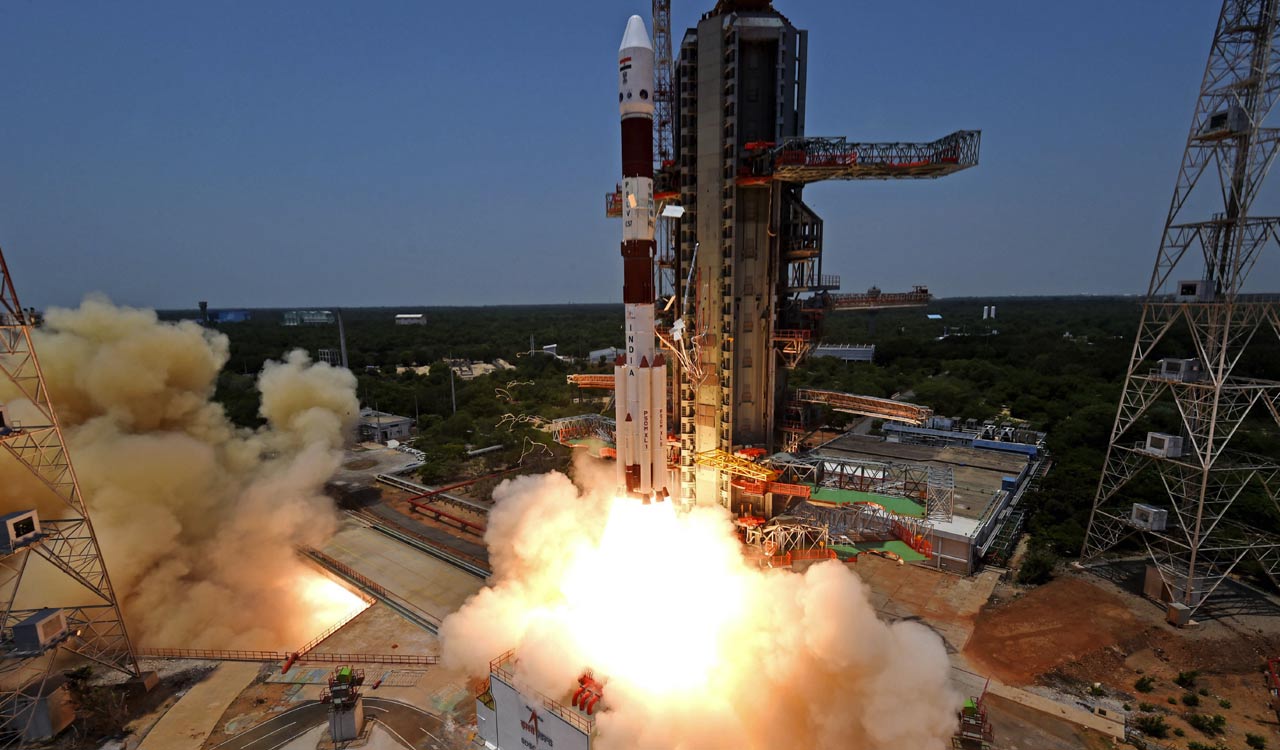


The success of the solar mission, Aditya- L1, marks a watershed moment in India’s space exploration journey and is a testimony to the technological prowess and the relentless dedication of the country’s scientists to carry out complex and intricate operations. In a critical manoeuvre, the scientists at the Indian Space Research Organisation (ISRO) successfully placed the spacecraft in the halo orbit around Lagrange Point 1 (L1), its desired destination from where it will make observations of the Sun for the next five years, entering new frontiers of science. L1 is the sweet spot in the Earth-Solar system where the gravitational effects of the two celestial bodies roughly cancel each other out. Aditya will remain at the same position, relative to the Sun and Earth, and its instruments are pointed towards the Sun for a completely uninterrupted view. Sun, the very source that sustains life on our planet, holds many secrets that are yet to be explored. Since Aditya-L1 is located outside the Earth’s atmosphere, its instruments can observe the ultraviolet radiation from the corona, and in the process, better understand its workings. Moreover, we need to monitor the Solar atmosphere and the corona continuously to monitor eruptions on the Sun, and study the properties of charged particles in the Solar wind. Aditya-L1 has seven instruments for the observation of all the radiation and charged particles. Its location, 1.5 million km away from Earth towards the Sun allows uninterrupted observations.
The latest achievement comes months after Chandrayaan-3 created history by successfully soft landing on the lunar South Pole, making India the only country to have ever done so. The Aditya mission, the first by an Asian country to be placed in orbit around the Sun, is expected to contribute significantly to our understanding of solar dynamics and enhance our ability to predict space weather phenomena. A better understanding of explosive processes happening within the Sun can potentially result in early warning systems for solar eruptions that threaten space-based assets like communication or navigation systems. The Sun, our closest star, offers an opportunity for in-depth examination of the functioning of stars, which is difficult to do for other distant stars. This celestial body is teeming with dynamic activity that stretches far beyond its visible surface. It periodically unleashes monumental bursts of energy and showcases various eruptive phenomena. However, these solar outbursts could potentially impact our technologically-dependent world, causing disruptions in our near-Earth space environment. To avert any such disturbances, early detection and intervention are important. The Sun, acting as a natural laboratory, provides an invaluable arena to study these elusive phenomena, which cannot be replicated directly in any controlled laboratory environment. By joining this kind of scientific research, ISRO is also sending out a signal that it has the technology, resources and expertise to contribute to every aspect of planetary science.
Also Read

Related News
-

Editorial: Diluting institutional autonomy may boomerang
-
Incredible to watch capability ISRO is developing in science missions: Indian-American NASA senior official
-
India, France step up space cooperation with new private-sector deals
-
ISRO says remains at centre of India’s space programme, refutes media reports as ‘baseless’