Is ‘insect apocalypse’ close-by?
Reports of the rapid and widespread decline of insects globally have caused great worry to scientists


The global health of insect populations is far more complicated than previously thought, new data suggests. Previous research also indicated an alarming decline in numbers in all parts of world, with losses of up to 25% per decade.
Reports of the rapid and widespread decline of insects globally have caused great worry to scientists.
This new study, the largest on insect change to date, aims to give a more complete understanding of what’s really happening to bugs worldwide. Drawing on data from 166 longterm surveys across 1,676 sites, it paints a highly nuanced and variable picture of the state of insect health.
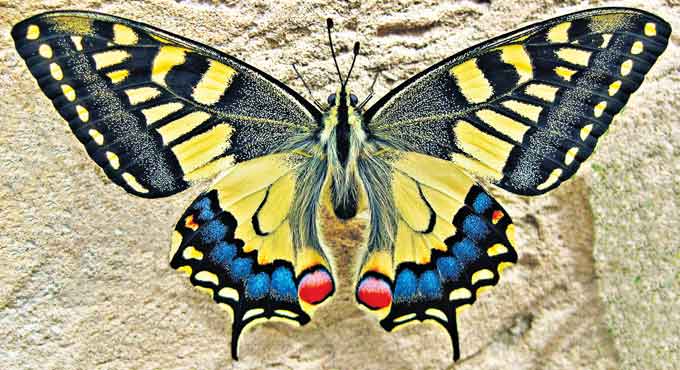
The compilation indicates that insects like butterflies, ants and grasshoppers are going down by 0.92% per year, which amounts to 9% per decade.
That is extremely serious, over 30 years it means a quarter less insects, said Dr Roel Van Klink, from the German Centre for Integrative Biodiversity Research.
Many people have an instinctive perception that insects are decreasing – often informed by the so-called ‘windscreen phenomenon’, where you find fewer dead bugs splattered on cars. The researchers say it’s real.
While land-based species are declining, the new study also shows that insects that live in fresh water, like midges and mayflies, are growing by 1.08% per year. The researchers believe this is because of legislation that has cleaned up polluted rivers and lakes.
However the increase in water based insects will not compensate for land losses.
“They are just a fraction of land based insects, not more than 10%,” said Dr Van Klink, adding that the area of freshwater we have on earth is just a small percentage of the total land mass, so the numbers of freshwater insects will never be able to compensate for the terrestrial insects. The scientists say there is no smoking gun on insect declines but they find the destruction of natural habitats due to urbanisation, to be key. This finding about habitat destruction has been echoed in other major pieces of research on biodiversity, including last year’s IPBES Global Assessment.
Ann Swengel, who has spent more than 30 years studying butterflies in the US, says, “We’ve seen so much decline, including on many protected sites. But we’ve also observed some sites where butterflies are continuing to do well.”
While the findings are complicated the authors believe they offer hope for the future. The nice thing about insects is that most have incredibly large numbers of offspring, so if you change the habitat in the right way we will see them recover really fast, said Dr Van Klink.
Do You Know?
- To date, scientists have catalogued about 1.5 million species of organisms on the planet, with insects making up about two-thirds of this bounty.
- Beetles, of the insect order Coleoptera, are the most biodiverse group of creatures known, with more than 380,000 species described to date, making up 40 percent of all insect species on the books.
- The renowned biologists Bert Hölldobler and EO Wilson estimated in their Pulitzer Prize-winning 1990 book, “The Ants”, that on the order of 10 quadrillion ants live on the planet at any given moment. That’s about 1.4 million ants per human, based on a world population of 7.3 billion people.
- Although insects can be found by the buckets just about anywhere on Earth, there’s one continent where they barely have a foothold: Antarctica.
- Insects do not breathe through their mouths. They inhale oxygen and exhale carbon dioxide via holes called spiracles in their exoskeletons.
Now you can get handpicked stories from Telangana Today on Telegram everyday. Click the link to subscribe.
Click to follow Telangana Today Facebook page and Twitter .

Related News