Reservations and NEP 2020
The Constitution has enshrined reservations in Articles 15 and 16, and any government policy has to be within its framework


Education has always tried to nullify differences, if not overthrow them, to achieve an even human progression on socio-cultural and historical fronts. Education, like other socio-political and cultural issues, when kept in the context of ‘talking difference’ of the ‘privileged’ and the ‘underprivileged’ obviously draws divisive opinions from the wise and the thoughtful because of the premium attached to it in terms of civility and enlightenment.
The National Education Policy (NEP) 2020 has shown, once again, the maturity of Indian democracy with heated debates and some surprising concerns too, which are unfounded. The concerns expressed by a political ideologist recently, in the case of reservations for Dalits in the implementation of NEP, are far-fetched.
Within Constitution
Given the fact that the Constitution has enshrined reservations in Articles 15 and 16, it is sheer anxiety syndrome of these political ideologues to blame that the NEP will put reservations of the underprivileged in jeopardy. It is a popular understanding that any policy devised by the government will work within the framework of the Constitution. There is no indication, whatsoever, as to the alleged foul play of the government on abrogating reservations. Several national entrance tests and the recruitment processes held in government organisations, after the declaration of NEP, attest to the fact that these are wild speculations. Moreover, the NEP deals with only the education department whereas the reservation policy concerns all departments.
In its emphasis on equity and inclusion, NEP clustered SCs, STs, OBCs, Divyang, girls, women, transgender, minorities, geographically marginalised and other deprived groups under ‘Socio-economic Deprived Groups’ (SEDGs). Special education zones have been conceived based on educational marginality, wherein several ongoing and new inclusive schemes will be planned and evolved for the larger benefit of these sections.
The NEP is concerned with the progress and prosperity of Dalits and other sections of the population equally. The new node of welfare governance is that while welfare measures for Dalits were the exclusive focus of the government, now there is an equal amount of attention being given to other weaker classes as well. However, this is not to endanger the concessions for Dalits, rather the measures may have become even more beneficial.
To make the reservation policy more effective and put it under closer scrutiny, the UGC has constituted a committee, the scope of which includes all the institutes of higher education — universities fully under government funding, deemed-to-be-universities, colleges and other grants-in-aid institutions and centres. This is a comprehensive coverage of all the institutions at this level.
Learning for All
The continuation of support – moral and material – for the underprivileged is an essential feature of the NEP. Therefore, it is not surprising that it alludes to these measures specifically and unequivocally. Section 6.2 in the NEP under the subheading ‘Equitable and Inclusive Education: Learning for All’ (p. 24) states: “While the Indian education system and successive government policies have made steady progress towards bridging gender and social category gaps in all levels of school education, large disparities still remain — especially at the secondary level –particularly for the socio-economically disadvantaged groups that have been historically underrepresented in education. Socio-economically Disadvantaged Groups (SEDGs) can be broadly categorised based on gender identities, . . . socio-cultural identities (such as Scheduled Castes, Scheduled Tribes, OBCs, and minorities) geographical identities (such as students from villages, small towns and aspirational districts), disabilities (including learning disabilities), and socio-economic conditions (such as migrant communities, low income households, children in vulnerable situations; victims of or children victims of trafficking, orphans including child beggars in urban areas, and the urban poor).”
Carefully noting that the dropout rate is higher for these categories, the NEP proposes many viable measures to stem them, including material help such as the provision of bicycles for the poor students to encourage them to go to school. Besides, there are many forms in which the old versions of support are continued.
We can, in fact, quote the NEP itself, as spelt out in Section 6.2.3: “While several programmatic interventions to uplift children from tribal communities are currently in place, and will continue to be pursued, special mechanisms need to be made to ensure that children belonging to tribal communities receive the benefits of these interventions” (p. 25). Therefore, it is a matter of surprise that critics of the policy should entertain any misgivings about the scholarships and other forms of aid being stopped.
The NEP does not stop here, for, it notes: “In addition, there have been various successful policies and schemes such as targeted scholarships, conditional cash transfers to incentivise parents to send their children to school, providing bicycles for transport, etc, that have significantly increased participation of [the] SEDGs in the schooling system in certain areas. These successful policies and schemes must be significantly strengthened across the country” (p. 25, Section 6.4). In sum, the reservations and protections that the Constitution offers these sections of the people are taken for granted, and it would be redundant to reiterate them.
Reducing Disparities
It is reiterated in Section 6.16 that “Within SEDGs, and with respect to all the above policy points, special attention will be given to reduce the disparities in the educational development of Scheduled Castes and Scheduled Tribes.” A continuation of similar concerns is in Section 6.18: “All scholarships and other opportunities and schemes available to students from SEDGs will be coordinated and announced by a single agency and website to ensure that all students are aware of, and may apply in a simplified manner on such a ‘single-window system’, as per eligibility. A similar reflection can be seen in Section 6.19: “All the above policies and measures are absolutely critical to attaining full inclusion and equity for all SEDGs – but they are not sufficient”.
The NEP will stand to the rigours of time to put India on a par with the best countries in the world. Obviously, such aims cannot be achieved without a universal outreach. “A cart with only one wheel cannot move fast,” notes the Arthashastra. Thus, without the participation of women, weaker sections, and the like, the country cannot move forward. This clearly entails additional support for these members of our society. The Ashramshalas proposed in tribal-majority areas, and similar measures, will be a waste if they are not supplemented by scholarships, fee waivers, and the like. In fact, at every level of the educational echelons – from administrators to teachers, parents, and students, these constitute an implicit commitment from the government which are no less valid than those explicitly stated.
A welfare government is one which goes beyond the merely mandatory provisions in the Constitution. It takes up even the non-justiciable provisions and may even privilege them over others. Thus the Directive Principles of State Policy, though non-justiciable, have been prioritised and sedulously implemented. For anyone to abrogate these would be impractical. It is for us to ensure that the proposed measures are implemented; both in letter and spirit, and that the lessons learnt in the past will prevent the old errors and enhance the successes. A good start would be to eschew fear-mongering.
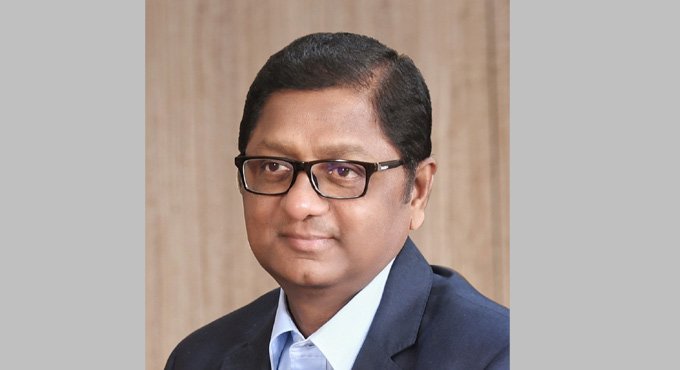
(The author is the Member of the University Grants Commission (UGC) and the Vice-Chancellor of The English and Foreign Languages University)
Now you can get handpicked stories from Telangana Today on Telegram everyday. Click the link to subscribe.
Click to follow Telangana Today Facebook page and Twitter .

Related News