Opinion: Ambedkar, Gandhi and the idea of village
By Nayakara Veeresha The second wave of the Covid pandemic has hit the economy, polity and society hard. The first wave was broadly an urban phenomenon whereas the second wave percolated into the rural and semi-urban areas. In the context of Covid-19, the ongoing discourse has widely covered the aspect of healthcare reforms. One of […]


By Nayakara Veeresha
The second wave of the Covid pandemic has hit the economy, polity and society hard. The first wave was broadly an urban phenomenon whereas the second wave percolated into the rural and semi-urban areas.
In the context of Covid-19, the ongoing discourse has widely covered the aspect of healthcare reforms. One of the missing links is the absence of the discussion on village as a unit of rural administration. Bihar, Chhattisgarh, Jharkhand, Madhya Pradesh, Odisha and Uttar Pradesh though made efforts to improve the necessary basic infrastructure, especially health facilities, and livelihood options to absorb the returning migrant workers. Set against this backdrop, we need to explore the concept of village and its criticality in rural local governance.
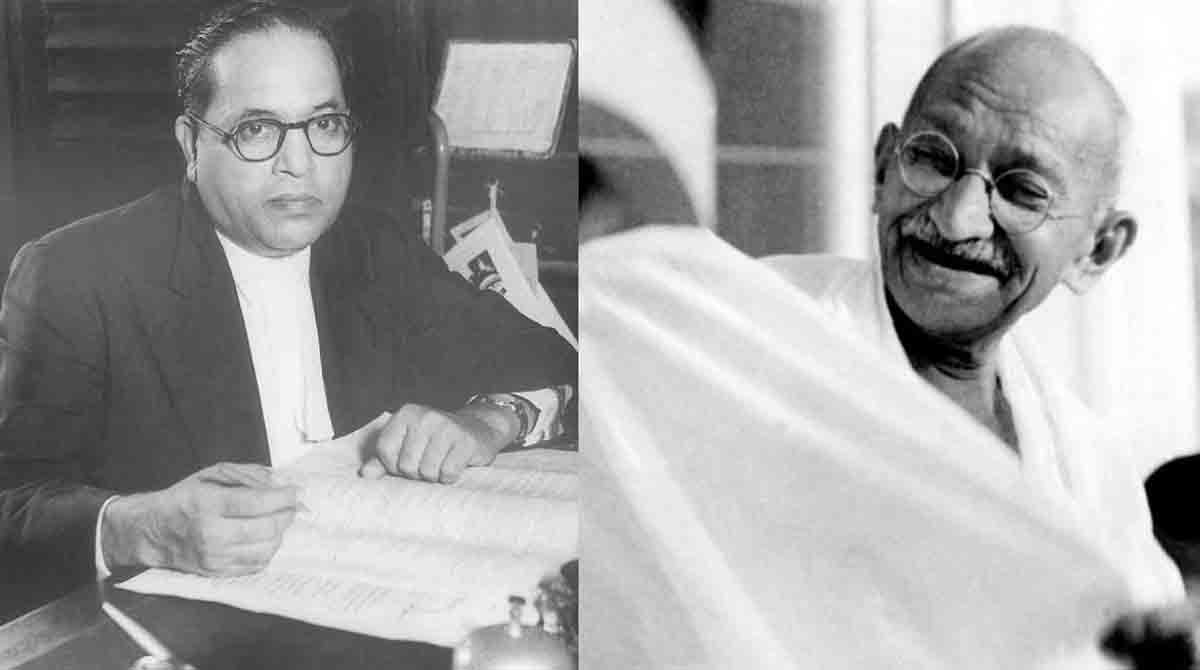
On 4th November 1948, Dr BR Ambedkar said, “What is the village but a sink of localism, a den of ignorance, narrow-mindedness and communalism” during the Constituent Assembly Debates (CAB). This led to the evolution of Article 40 of the Constitution: “the State shall take steps to organise village panchayats and endow them with such powers and authority as may be necessary to enable them to function as units of self government”.
Two Sides
Broadly, two viewpoints emerged in the CAB — village perceived as a unit of administration and the other dimension imagined it as a transitory entity in the process of modernisation. What is striking in both these ideas is the former concept of village is rooted in the history of freedom struggle, whereas the latter is embedded in the tradition of enlightenment and as a precursor of emancipatory politics.
Ambedkar’s description of village is entirely different from Metcalfe and MK Gandhi’s conception. According to Sir Charles Metcalfe (1830), “the village communities are little republics, having nearly everything that they want within themselves, and almost independent of any foreign relations”. In 1942, Gandhi wrote, “my idea of village swaraj is that it is a complete republic, independent of its neighbours for its own vital wants, and yet interdependent for many others in which dependence is a necessity”.
Both Ambedkar and Gandhi’s conception of a village needs to be understood in the context of a broader aim of rural development. In postcolonial modernity, the idea of village has significantly undergone quantitative and qualitative changes indicating a gradual transformation from its traditional roots to modern identity. This change is inevitable and is a socially iterative process. At the individual level, this transformation remains an intuitive process, which is evident in both Ambedkar and Gandhi’s idea.
This incremental transformation in the conceptualisation of village and its role in rural Indian life has given the scope for elements of conflict. However, the conflicting elements are absent in Ambedkar and Gandhi’s conceptions as both of their village imaginations have only a divergent opinion rather than evoking a perceptional conflict among the members of the CAB or outside of it. Ambedkar’s acceptance of the amendment and the insertion of Article 31A substantiate this point.
Reading Together
A critical aspect of this Article insertion and the acceptance of the amendment by Ambedkar is not an indication of the perceptional victory as understood then by some members of the Constituent Assembly. It signifies the level of acceptance and respect towards the differing views of the Constituent Assembly members by Ambedkar as the chair of the drafting committee.
In envisaging the idea of village, both Ambedkar and Gandhi have laid a foundation for the path of development of the nation. To illustrate, Gandhi’s idea of village as a self-sufficient entity provides a normative framework, whereas Ambedkar’s conception lays down the path to achieve this objective. In simple words, Gandhi’s conception indicates an end goal to be achieved; Ambedkar’s description is a means to reach the intended goal.
Ambedkar’s description has provided the empirical reality to Gandhi’s normative framework. In this way, both ideas complement each other. Jawaharlal Nehru’s view is like an intervening or explanatory variable supplementing the substance to empiricism. The normative framework, explanatory variables and empirical aspects are all necessary to explain and analyse the social phenomenon in the diverse and complex rural life.
Integrated Approach
Village as an administrative unit needs to be embedded in the development of individual citizenship. For the sake of the day-to-day administration, it can be given primacy, however, in order to achieve the village republic or Gram Swaraj, developing active citizenship among the individual is imperative and indisputable. This integrated approach is necessary to understand the divergent views of Ambedkar and Gandhi.
The relationship between the individual and the village as a unit of administration is like that role of individuals in a family set-up. A healthy and harmonious relationship builds a dynamic family. Similar is the case of an individual’s role in a village. In a Marxian framework, the analogy resembles the dialectical relationship between capital and labour.
Seen from this perspective, both Ambedkar and Gandhi’s idea of village must be read together rather than seeing it in isolation. A separate reading complicates the conception rather than simplifying it. Ambedkar’s ‘Annihilation of Caste’ is a seminal work towards abolishing identity-based discrimination and giving a rightful place to the socially and economically disadvantaged sections.
The scheme proposed by Gandhi, especially the rekindling of rural industries, is a necessary tool for the economic empowerment of villages. Social equality in rural society as envisaged by Ambedkar will be a reality only after achieving economic empowerment along the Gandhian lines.
The 27 years of decentralised governance experience shows that the efficacy of the Panchayats as the local state is a work in progress and still has a long way to go. The objectives of 73rd and 74th Constitutional Amendment Acts of 1992-93, ie, economic development and social justice can be achieved by reading and applying the concept of village of both Ambedkar and Gandhi.


Related News