Opinion: Beyond ‘too few’ and ‘too many’ — India’s demographic paradox
As fertility falls and ageing accelerates, India must shift from population control to a welfare-centred policy rooted in care, equity, and dignity


By Balhasan Ali, Tasneem Khan
Since its independence, the population question has riddled India’s policy concerns — shaping debates on resource allocation, food security, employment, housing and urbanisation. In the early decades, as fertility remained high and mortality plummeted with advances in medicine and public health, India’s rising population unsettled policymakers and scholars alike. Paul Ehrlich, in The Population Bomb, famously warned that India might not be able to feed its growing population amid rampant hunger and poverty.
Also Read
But history, as we know, unfolded differently.
Defying such prophecies, India transformed its agricultural landscape through the pioneering efforts of Norman Borlaug and MS Swaminathan’s Green Revolution. A nation once on the brink of famine became self-sufficient and, in time, even an exporter of grain. However, while the food crisis was averted, an increasing population continued to strain employment, housing and income distribution. The ‘population problem’ thus evolved beyond a question of numbers, reflecting deeper anxieties about equitable growth, human development, and social justice — concerns that continue to persist today.
Demographic Paradox
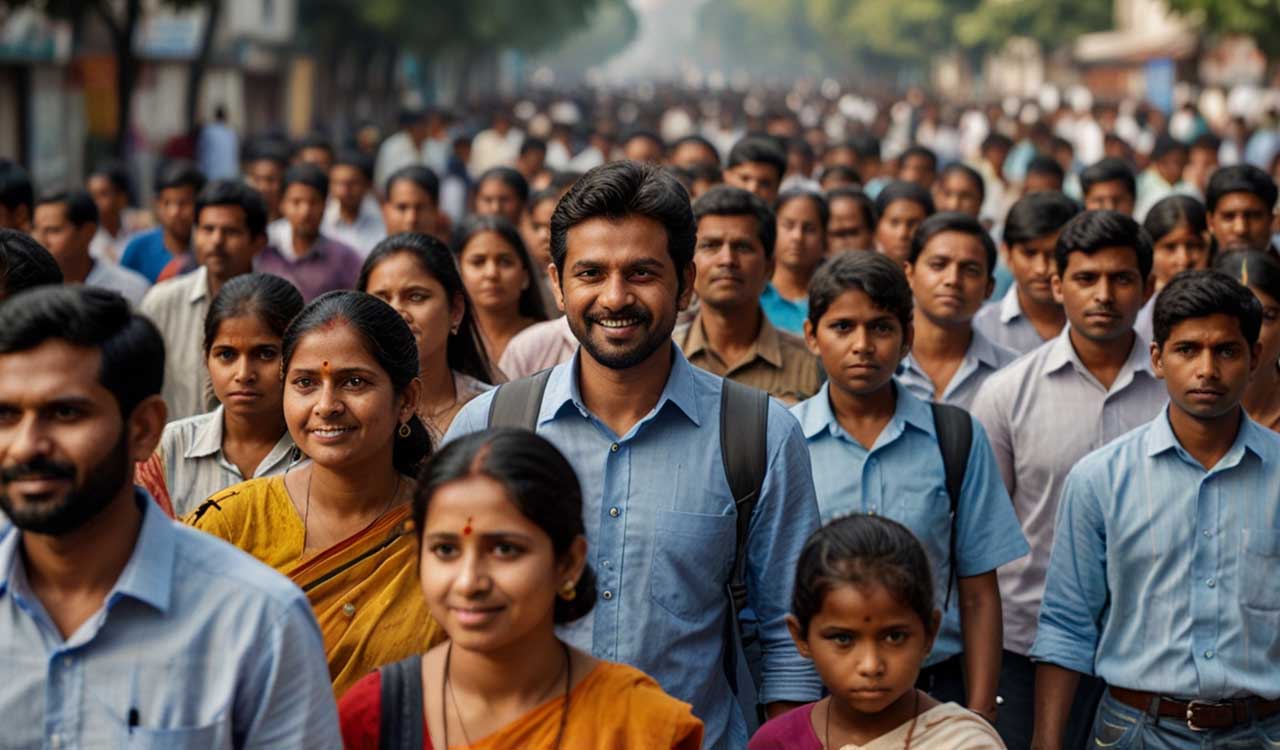
Moving beyond the obsolete binaries of ‘too few’ and ‘too many,’ India’s population discourse now centres on sustainability. As the world’s most populous nation, India faces a demographic paradox: fertility has fallen while life expectancy continues to rise. Over the decades, the total fertility rate declined sharply — from 5.7 in 1971 to 2.0 in 2021 — below the replacement level of 2.1. Yet, despite this decline, population momentum will sustain growth for some time due to the large number of young people entering reproductive age.
However, these aggregate figures are a smokescreen; the demographic transition is far from uniform. It unfolds unevenly across regions and social groups. According to NFHS-5, fertility remains above replacement level in central and eastern regions (2.2) and in States such as Meghalaya (2.9), Bihar (3.0), Jharkhand (2.3), and Uttar Pradesh (2.3). Higher fertility also persists among Muslims (2.4), Scheduled Castes (2.8), Scheduled Tribes (2.9), and poorer and less educated women. In contrast, southern and western States, along with wealthier and more educated groups, experience fertility well below replacement.
Fertility itself is not a monolith, nor a cultural constant. It is a social outcome shaped by education, income, gender relations, and access to healthcare. As French philosopher Beauvoir observed, one is not born but rather becomes a woman; reproduction, too, is socially mediated rather than purely biological. Fertility differentials across regions and communities reflect these broader asymmetries in access and agency. Thus, India’s population policy must move beyond mere recalibration of numbers to reorient its approach from one of control to one of care and empowerment.
Population Ageing
Another facet of India’s demographic turn, and a defining challenge ahead, is not rapid population growth but population ageing — a trend for which India remains largely unprepared. Declining fertility has reduced the burden of child dependency, while rising life expectancy has expanded the share of older adults, reshaping India’s demographic future.
For instance, the share of the elderly population (aged 60 and above) has nearly doubled — from 5.6 per cent in 1961 to 9.7 per cent in 2023. Contrary to the common perception that ageing is concentrated in southern States, several northern States also report a substantial elderly population: Himachal Pradesh (13.2 per cent), Jammu & Kashmir (11.1 per cent), and Punjab (11.6 per cent) have all crossed the national average.
Evidence from Western countries clearly shows that once fertility falls below the replacement level, reversing it is extremely difficult, especially in democratic societies
The improvement in life expectancy has not only increased the number of older adults but also the absolute size of the widowed population. According to the Sample Registration System (SRS) Report 2023, widowed individuals constitute 3.6 per cent of India’s total population, comprising 1.5 per cent of men and 5.6 per cent of women.
States such as Tamil Nadu and Kerala record a particularly high share of widowed persons, largely driven by the higher proportion of widowed women. These figures reveal a gendered dimension of ageing, where elderly women are more likely to experience economic insecurity and social vulnerability. This intersection of longevity, widowhood, and gender reflects the precarious nature of later life for many Indians, particularly women.
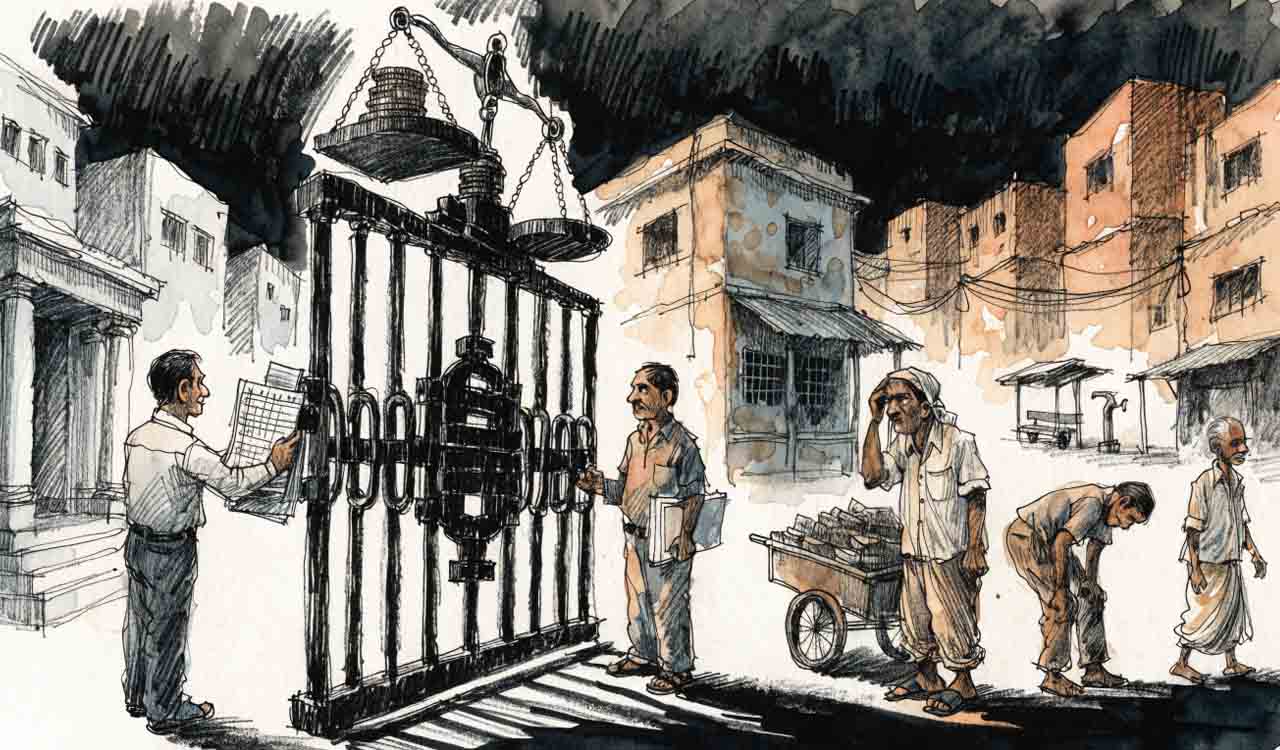
Thus, the challenge of ageing extends far beyond demographic statistics. In a society where women’s claim to land and resources remains tenuous and the scaffolding of social protection fragile, ensuring survival is important, but so is ageing with dignity.
Infertility and Childlessness
Another emerging demographic concern in India is the rising prevalence of infertility and childlessness. According to NFHS-5, about 1.56 per cent of Indian women experience childlessness, with the southern region reporting the highest prevalence (2.1 per cent). States such as Kerala, Karnataka, Tamil Nadu, Goa, Ladakh, and Lakshadweep show relatively higher rates of childlessness compared to other regions. Similarly, around 1.5 per cent of women suffer from primary infertility (the inability to conceive at all), while 3 per cent experience secondary infertility (the inability to conceive after a previous pregnancy).
Once again, the southern region records the highest prevalence, with 2 per cent primary and 4.3 per cent secondary infertility. States like Meghalaya, Lakshadweep, Mizoram, and Kerala exhibit particularly high levels of secondary infertility. Interestingly, rural women are particularly more affected by infertility, especially in southern States. These patterns suggest that, alongside declining fertility and population ageing, infertility has become a critical, though often overlooked, dimension of India’s population dynamics. It carries profound social, economic, and psychological implications, challenging rigid assumptions about family, gender and reproduction in Indian society.
The pressing question, therefore, is what kind of population policy India should pursue— one that remains both effective and adaptable across states. The traditional concern of fertility control has become largely dated; the priority has now shifted towards sustaining the current fertility rate. Evidence from Western countries clearly shows that once fertility falls below the replacement level, it is exceedingly difficult to reverse, particularly in democratic societies.
Unlike many developed nations, India lacks the fiscal capacity and institutional mechanisms to offer large-scale incentives for raising fertility levels. At the same time, rising infertility, an increasing proportion of widowed individuals, rapid population ageing amid fragile social safety nets, and evolving family structures pose complex demographic and social challenges. Together, these trends are a cautionary tale; they are reshaping India’s family system, social institutions and long-term growth trajectory.
India’s population question, therefore, is a pastiche of issues, defying neat binaries of ‘too high’ or ‘too low’ fertility. What it needs now is a multidimensional and regionally responsive population policy that enables the state to engage proactively with its diverse demographic realities and the shifting social fabric they shape.
(Balhasan Ali is an Assistant Professor and Tasneem Khan is a Master student in the school of public policy and governance, TISS, Hyderabad. Views are personal)

Related News