Opinion: Forgotten behind bars — India’s jails are failing mentally ill undertrial prisoners
Indefinite detention, inadequate care, and systemic neglect of mentally ill prisoners raise urgent questions about fair trial rights


By Divya Sridhar, Shashank Shekhar
In March 2021, the Calcutta High Court released a Nepalese citizen who had been detained for 41 years without a conclusion to his trial. During this period, he was denied adequate care for his mental conditions. His case was not an isolated incident but rather a symptom of a deep-rooted crisis in India’s criminal justice administration.
Investigations revealed that in West Bengal alone, at least 104 mentally ill undertrial prisoners were eligible for release under existing legal guidelines, yet had been languishing in prisons and mental health institutions.
In August 2021, the Kerala High Court took suomotu cognisance of another shocking case: a 72-year-old undertrial prisoner who had been detained in a mental health facility for 49 years. These cases expose a troubling reality in which thousands of mentally ill undertrial prisoners across India remain trapped in a legal and administrative void, denied their fundamental right to a fair trial.
The statistics paint a grim picture of life behind bars. According to the Prison Statistics India report (2023) published by the National Crime Records Bureau (NCRB), 16,503 prisoners suffer from mental illness, with undertrial prisoners constituting the most vulnerable group. The uncertainty of their legal status, combined with the stress of incarceration, creates conditions that often precipitate or worsen mental health conditions. More alarmingly, prison statistics indicate that 74.8% of unnatural deaths in Indian prisons are caused by suicide — a stark reminder of the acute vulnerability of this population.
Systemic Dysfunction
Gomia Ho was arrested in 1945 and diagnosed with mental illness in 1948. Although he was declared sane in 1966, nearly 18 years after diagnosis, and this recovery was reported to the Judicial Magistrate in 1969, no action was taken. Ho remained incarcerated until the Supreme Court intervened in 1982, nearly 37 years after his arrest and 33 years after his diagnosis.
In another case, Raghunandan Gope was arrested in 1950 and diagnosed with mental illness in 1951. Unlike Ho, Gope was never declared sane, yet he remained imprisoned for approximately 32 years until judicial intervention in 1982.
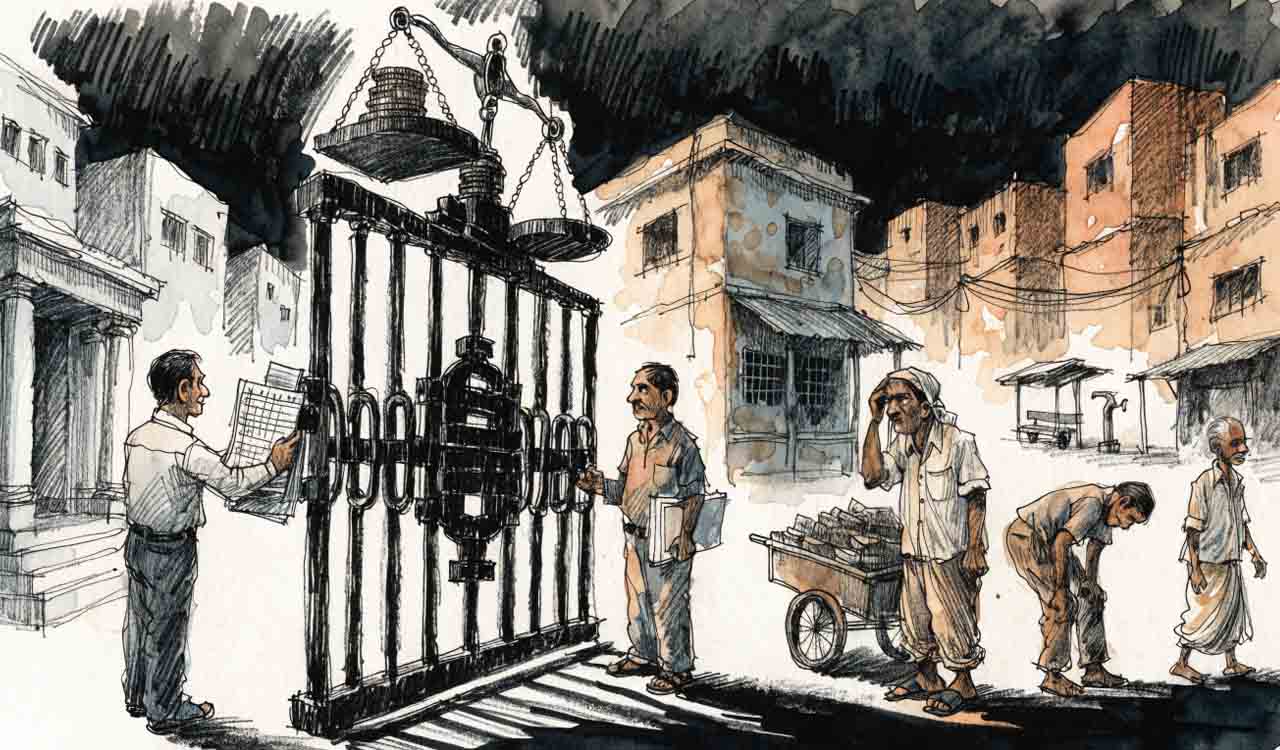
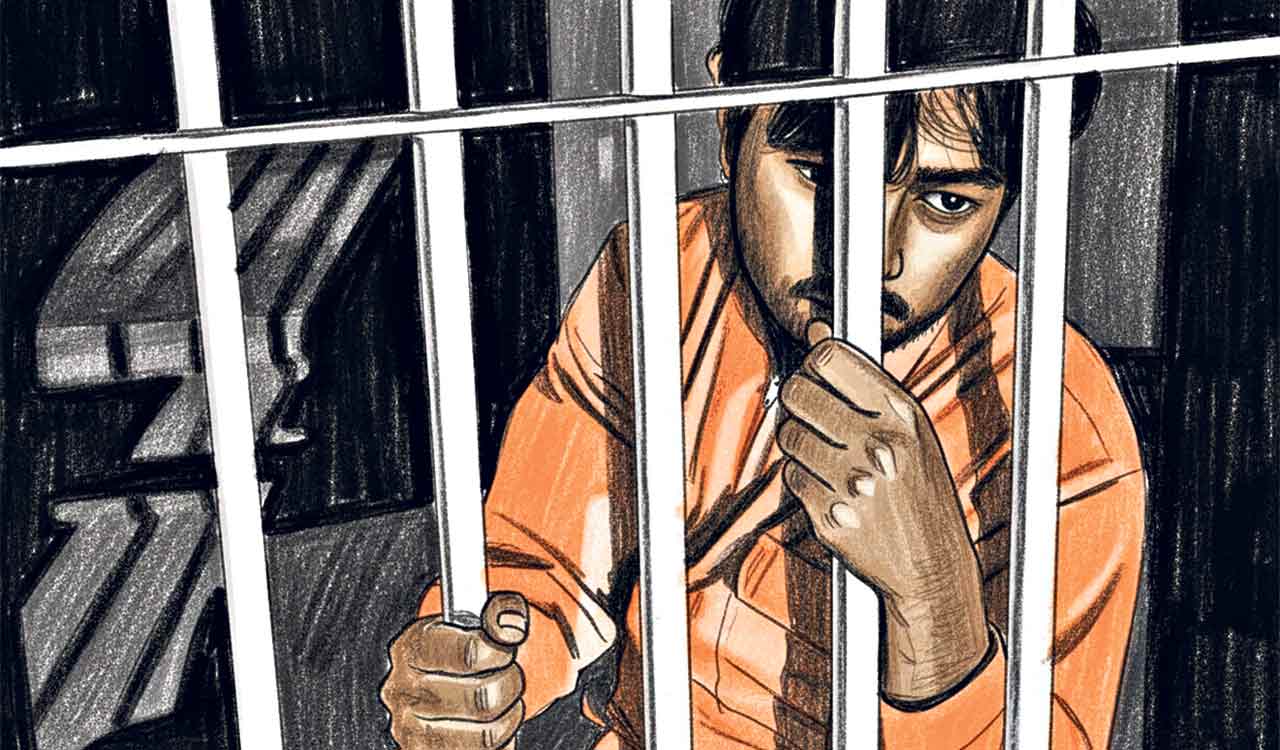
These forgotten souls expose a cruel trap: no trial, no care, just endless prison shadows.
The study identified a critical pattern: in nine out of ten cases, the judiciary found systematic lapses in maintaining and submitting mandatory bi-annual reports on the mental and physical condition of mentally ill undertrial prisoners. The Mental Healthcare Act, 2017, requires mental health establishments and prisons to submit these reports to State governments every six months, yet compliance remains sporadic at best.
More troubling still is what happens when reports are filed. The audit revealed that even when recovery from mental illness was documented and reported to authorities, it failed to trigger any action. Prison and mental health officials would dutifully file paperwork indicating that a prisoner had recovered and was fit for trial or release, yet this information would languish in bureaucratic channels without response from magistrates, judges, or executive authorities.
A specialised mental health tribunal could expedite cases with clear timelines, expert input, and focused handling — just as the Arbitration and Conciliation Act, 1996, did for commercial disputes
This breakdown represents a fundamental failure in the coordination between medical, executive, and judicial authorities. Information flows in one direction, but doesn’t catalyse the decisions and actions necessary to protect prisoners’ rights.
The Legal Framework: Strong on Paper, Weak in Practice
India’s legal framework for protecting mentally ill undertrial prisoners appears comprehensive. After ratifying the United Nations Convention on the Rights of Persons with Disabilities in 2007, India enacted the Mental Healthcare Act, 2017, to align domestic laws with international obligations. The Act provides for the transfer of mentally ill prisoners to mental health establishments and sets minimum standards for mental health care in prisons.
The National Mental Health Policy (2014) recognises prisoners as a vulnerable population requiring specialised attention. In Sunil Batra v. Delhi Administration & Ors, the SC affirmed that prisoners, whether convicted or undertrial, retain all fundamental rights guaranteed by the Constitution, including the right to life and personal liberty under Article 21.
Where the System Breaks Down
Yet, a troubling chasm persists between legislative promise and lived reality. The gap exists at three critical levels: policy design, implementation, and enforcement.
Legal frameworks inadequately integrate modern psychiatric knowledge, focusing primarily on psychotic disorders that render an individual unfit for trial, while overlooking subtler conditions such as depression, anxiety, and PTSD that can impair trial competency without eliminating it.
They invoke “reasonable accommodations” for mentally ill prisoners but offer no practical guidance — such as modifying interrogation rooms, adapting court procedures, or adjusting communication —leaving decisions to ad hoc discretion and inconsistent rights protection.
Prison Statistics India (2022) shows unfilled psychologist/psychiatrist posts across States; prisons lack uniform screening, resulting in detection that varies by facility; and under the Mental Healthcare Act, short- and long-stay homes for recovered prisoners largely remain non-functional, leaving many trapped in prisons or asylums.
Enforcement remains the third critical gap in protecting mentally ill undertrial prisoners. Judicial officers, lacking psychiatric training, often substitute personal judgment for expert medical opinion when assessing fitness to stand trial, while legal aid counsel without specialised preparation in mental health advocacy fail to secure necessary accommodations or challenge unlawful detention. Most alarmingly, coordination breakdowns among prisons, mental health facilities, magistrates’ courts, and state departments ensure that even when individual elements operate correctly, the system fails to safeguard fundamental rights.
The Path Forward
India’s success with arbitration in decongesting civil courts through specialised, time-bound dispute resolution of technically complex commercial cases offers a direct parallel: mentally ill undertrial prisoners face similarly niche, high-stake disputes involving psychiatric complexity and constitutional rights, which regular courts handle inefficiently. A specialised mental health tribunal system could thus expedite resolutions via clear timelines, expert input, and focused case handling, precisely as the Arbitration and Conciliation Act, 1996, achieved for arbitration.
- Time Bound Processes: Section 29A of the Arbitration and Conciliation Act, 1996, mandates arbitral awards within 12 months of pleadings completion, inspiring analogous strict timelines for mentally ill prisoners. Once diagnosed, psychiatric evaluation must occur within 30 days, fitness determination within 60 days, and trial commencement with accommodations or transfer to care facilities within 90 days where these proposed limits, absent from BNSS but akin to Mental Healthcare Act’s 3/7/21 day review periods, would be judicially enforced.
- Standardised screening, accommodations & oversight: India needs a standardised, validated mental health screening for all prisoners within 24 hours of admission—currently absent from law — mirroring arbitration’s documentation mandates to detect the full spectrum of mental health conditions. Detailed standards must define environmental, procedural, communication, and temporal accommodations during interrogation, trial, and detention. A specialised Mental Health Oversight Committee would receive reports, including prolonged detentions, and enforce compliance, paralleling institutional arbitration’s quality control.
- Capacity building & coordination: States should fill prison psychiatrist and psychologist vacancies, expand their roles, and invest in forensic psychiatry through medical college partnerships and competitive pay, mirroring systematic buildout of arbitrator training and arbitration infrastructure. Judicial officers and legal aid counsel need mandatory training in mental health law, assessment interpretation, and client advocacy. Formal protocols with timelines, liaison officers, and shared systems would ensure mental illness triggers action, like institutional arbitration’s case management.
A Test of Justice
The treatment of mentally ill undertrial prisoners represents a fundamental test of India’s commitment to human dignity and equality before law. Their prolonged detention without trial, care, or treatment violates the most basic principles enshrined in the Constitution.
The legal framework is already in place. What is lacking is the political will to translate paper promises into lived reality. Until that happens, thousands of people with mental illness will continue to languish in prisons and mental health facilities denied justice and hope, and stripped of dignity. The question is not whether India knows what must be done, but whether it will muster the commitment to do it.

(Divya Sridhar is Assistant Professor, Jindal Global Law School. Shashank Shekhar is Assistant Professor, Lloyd Law College)

Related News