Opinion: AI and mental healthcare
Despite the advantages of AI in designing strategies for mental health illnesses, certain obstacles must be addressed


By Toshet Sethi, Garima Rajan
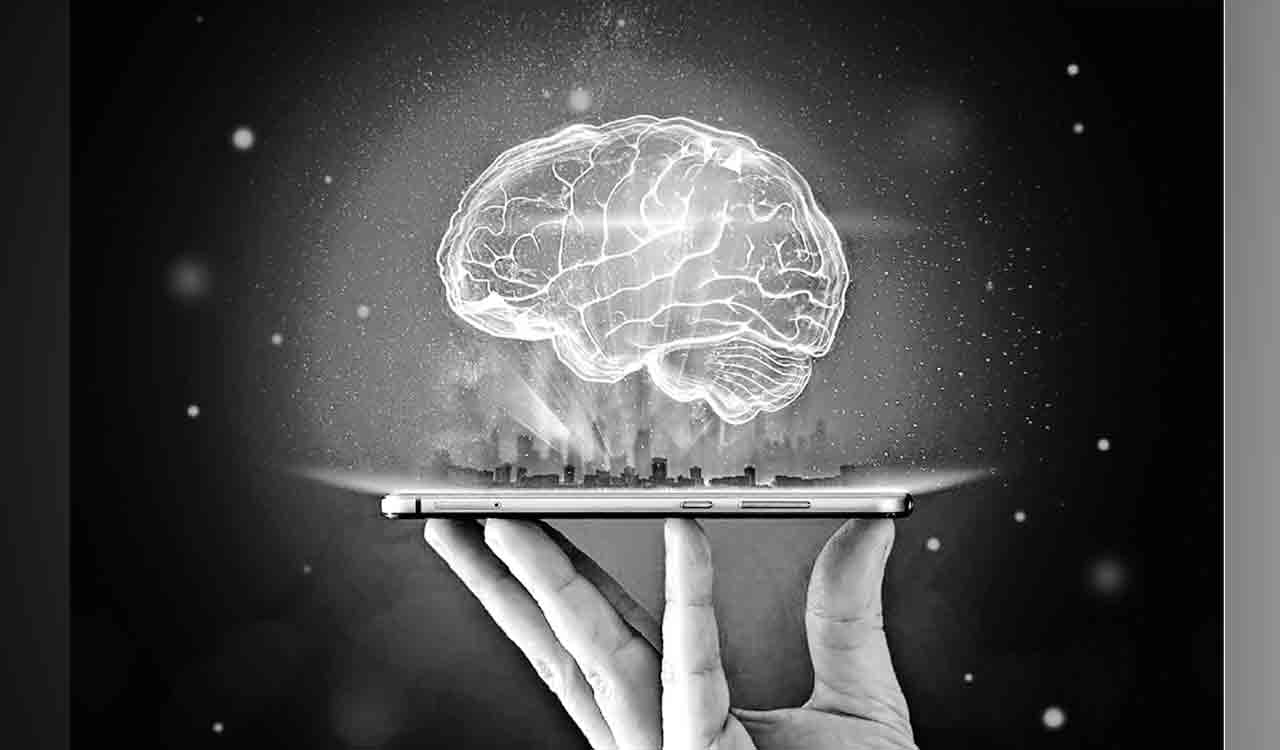
Artificial Intelligence (AI) has altered the area of mental health in several ways, most notably in the development of tailored treatment regimens for people with mental health disorders. One of the more recent areas of interest for AI is psychology, specifically mental health. As AI expands its reach, it is becoming increasingly important for psychologists, therapists and counsellors to comprehend the technology’s current capabilities and future promise to revolutionise mental healthcare.
Effectiveness of AI
Customised treatment plans are a relatively new notion in mental health, and artificial intelligence has made major advances toward this objective. One of the primary benefits of AI in developing personalised treatment plans for mental health disorders is increased efficiency. AI algorithms can analyse patient data quickly and accurately, identifying patterns and correlations between symptoms that may not be apparent to human clinicians. This analysis enables clinicians to diagnose and treat patients more accurately, ultimately leading to better outcomes (Bateman, 2021).
AI treatment applications have also demonstrated significant effectiveness in reducing symptoms of anxiety and depression. For example, a recent study found that after the first two weeks of treatment, an AI therapy software called Youper reduced anxiety by 24% and sadness by 19% (Mazza, 2022). This result suggests that AI has the potential to be a powerful tool in treating mental health conditions and improving patient outcomes.
Chatbots in Psychology
Recently, a study published in Psychological Methods described how D Friedrich Götz utilised GPT-2, a predecessor to ChatGPT, to develop a psychological test that exhibited comparable functionality to tests used by psychologists. This highlights the potential of AI technology, specifically chatbots, in providing support for individuals who lack social support. However, it is important to note that AI technology cannot and should not replace the role of therapists, as the job of a therapist involves much more than simply providing social reciprocity.
Furthermore, it is crucial to understand that AI technology is not sentient, feeling, or thinking; rather, it is based on mathematical algorithms. While the possibility of AI-powered therapists cannot be completely ruled out, it is not a desirable outcome, and it is unlikely to occur in the near future (Rolfsen, 2023).
‘Un-effectiveness of AI’
Despite the tremendous advantages of AI in designing tailored treatment strategies for mental health illnesses, certain obstacles must be addressed.
* Addressing the Bias
One of the most significant issues is the possibility of bias in AI systems. When algorithms are trained on data that is not representative of the patient population, biases might arise, leading to erroneous diagnoses and treatment decisions (Obermeyer et al, 2019). To overcome this issue, AI systems must be built and trained on varied datasets that appropriately reflect the patient population.
* Lack of Interpersonal Connection
The use of AI technology in mental health treatment necessitates considerable modifications in practitioners’ approaches to patient care. Clinicians must be trained in the use of AI technology to create tailored treatment regimens, as well as in the interpretation and integration of AI-generated data into clinical decision-making.
* Lack of Regulation & Security
A study by Titiov & Andrews found that the possible loss of the interpersonal connection that is essential to treatment is one of the main issues with employing AI in mental health care. Patients could feel more at ease discussing intimate details with a human therapist than with a computer, and they might believe that an AI system doesn’t fully comprehend them (Ebert et al, 2018).
Overreliance
Moreover, due to AI’s youth in this field, there is at present no regulation to guarantee the security and efficiency of AI systems. This indicates that there is a danger associated with the use of unproven or invalidated AI systems in the provision of mental health services, which may be harmful to patients (Ethics Guidelines for Trustworthy AI, 2019).
Lastly, there is a chance that those who offer mental health treatment might rely too much on AI systems, neglecting to hone and maintain their own clinical expertise and judgment. The standard of treatment given to patients can suffer as a result (Topol, 2019).
Making it Powerful
In a nutshell, the integration of AI technology in mental health care has immense potential to revolutionise the way mental health treatment is delivered. Personalised treatment plans, increased efficiency and improved accuracy are just a few of the benefits AI can offer. However, it is essential to address the challenges associated with AI, such as data privacy and security, bias in algorithms, and the need for clinician training.
With proper implementation and training, AI can become a powerful tool in the fight against mental illness, bringing hope and healing to millions of people around the world. We must work towards a future where AI technology is used responsibly, in conjunction with human clinicians, to provide the best possible care for those suffering from mental health conditions.


Related News